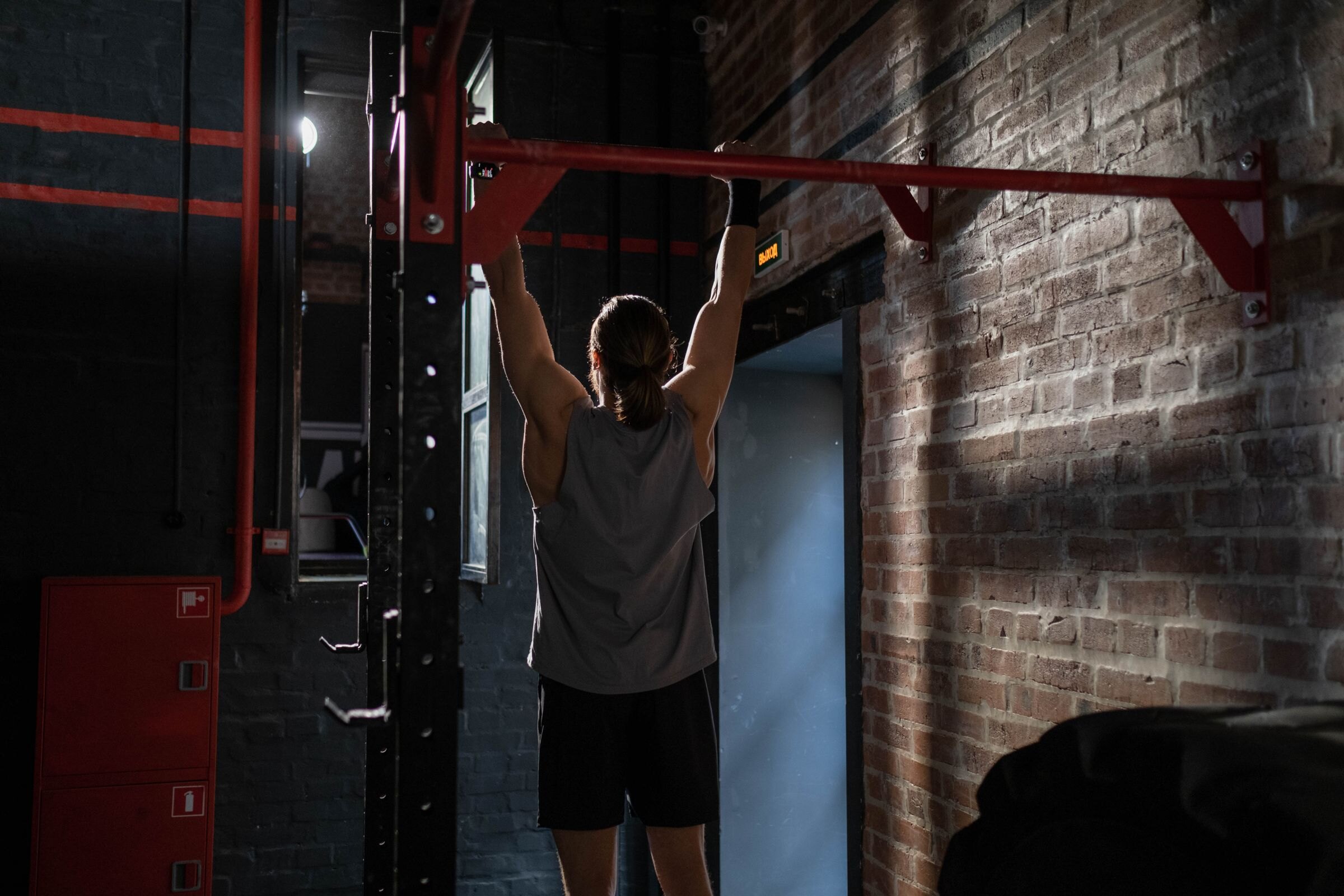
A wide, thick back is built with two kinds of pulling. Vertical pulls, like pull-ups and pulldowns, build the lats that give you width. Horizontal pulls, like rows, build the thickness of your mid and upper back. A hinge or two keeps your lower back strong enough to support it all.
Below are the nine back exercises we would build a program around, with the sets, reps and cues for each, plus a simple twice-a-week plan.
The muscles of your back
| Muscle group | What it does | Trained best by |
|---|---|---|
| Lats (latissimus dorsi) | Pull your upper arms down and back | Pull-ups, pulldowns, rows |
| Upper back (traps, rhomboids, rear delts) | Pull your shoulder blades back and together | Rows, face pulls, shrugs |
| Lower back (spinal erectors) | Keep your spine straight under load | Deadlifts, back extensions |
Your lats are the largest muscles of your back and the main source of width. The mid and upper traps, rhomboids and rear delts create the thickness you see from the side. The spinal erectors run along your spine; they work in almost every standing exercise and respond well to direct hinge work.
Vertical vs. horizontal pulls
Vertical pulls bring your arms down from overhead: pull-ups, chin-ups and lat pulldowns. They emphasize the lats and the lower traps.
Horizontal pulls bring your arms back toward your torso: barbell, dumbbell, cable and machine rows. They hit the mid traps, rhomboids and rear delts hard, and they train the lats too.
The line between the two is blurry. When researchers compared common lat exercises, muscle activity changed only modestly between variations, and the seated row and wide-grip pulldown had the best ratio of lat to biceps activity.[1] The practical answer is to do both: at least one vertical and one horizontal pull in every back session.
The 9 best back exercises
Pick three or four of these per session; the plan further down shows how to combine them.
-
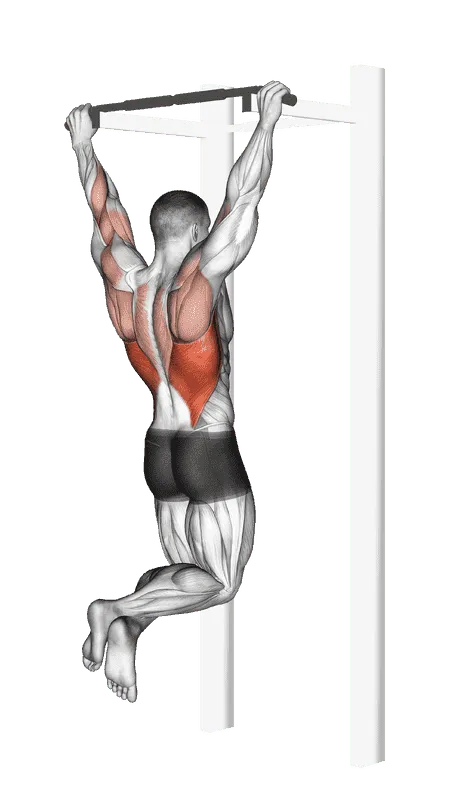
1 Pull-Up - Sets
- 3–4
- Reps
- 5–10
- Rest
- 150 s
-
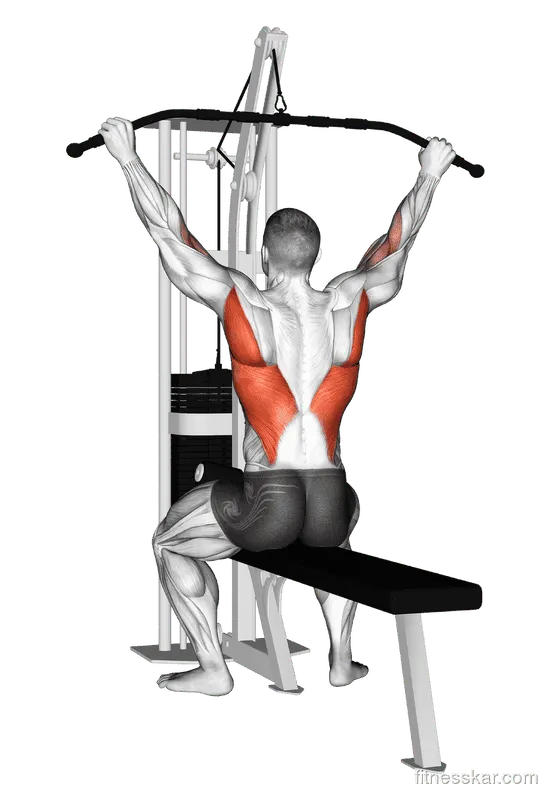
2 Lat Pulldown - Sets
- 3
- Reps
- 8–12
- Rest
- 120 s
-
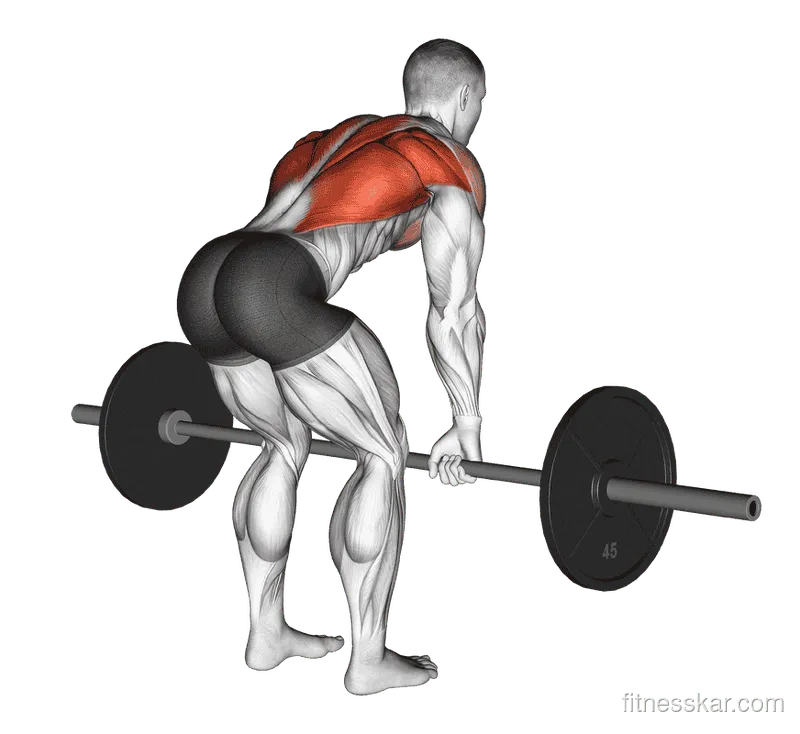
3 Barbell Bent-Over Row - Sets
- 3–4
- Reps
- 6–10
- Rest
- 150 s
-

4 Dumbbell Bent-Over Row - Sets
- 3
- Reps
- 8–12
- Rest
- 90 s
-
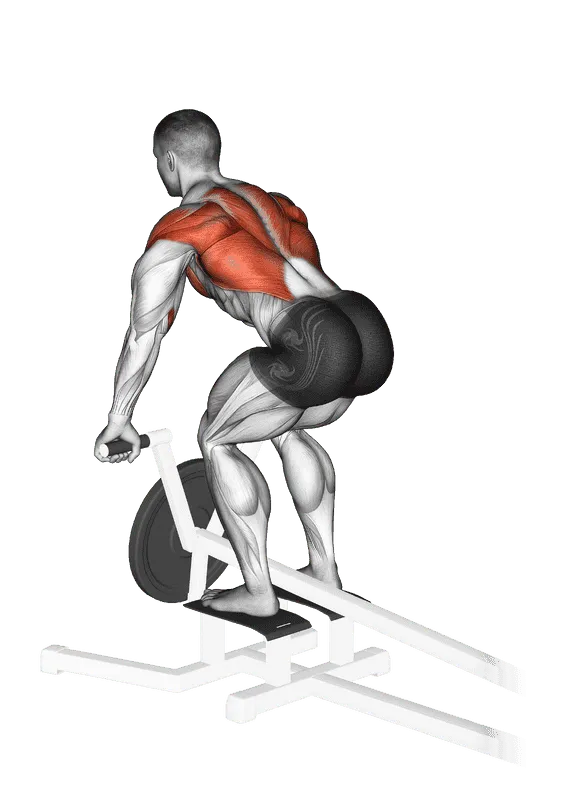
5 Lever T-bar Row (Plate Loaded) - Sets
- 3
- Reps
- 8–12
- Rest
- 120 s
-
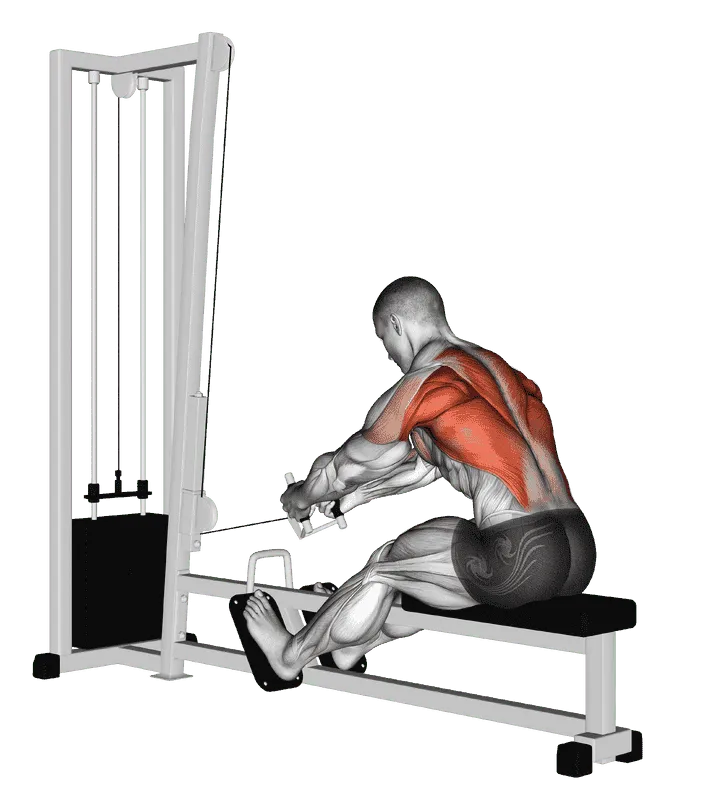
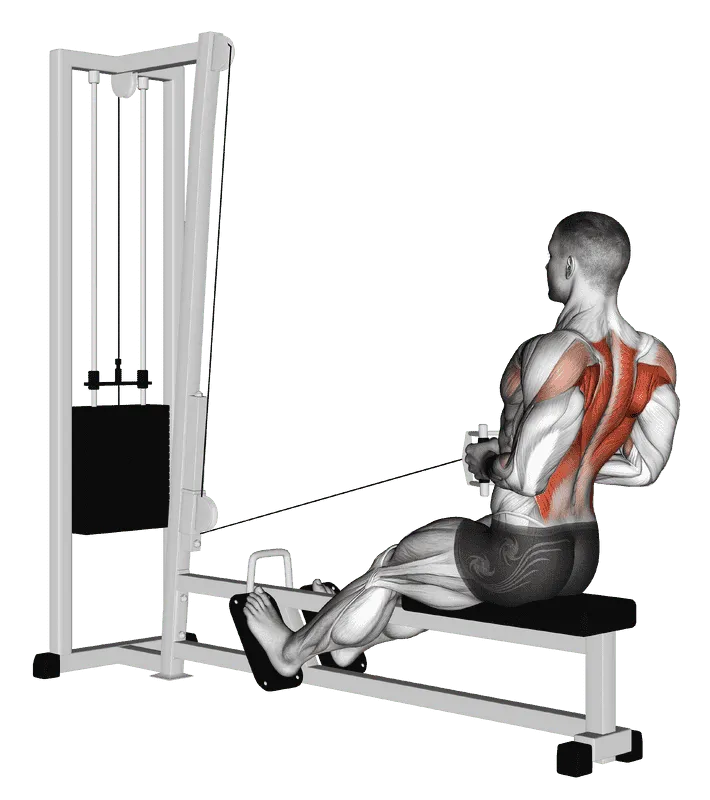
6 Cable Seated Row - Sets
- 3
- Reps
- 10–12
- Rest
- 90 s
-
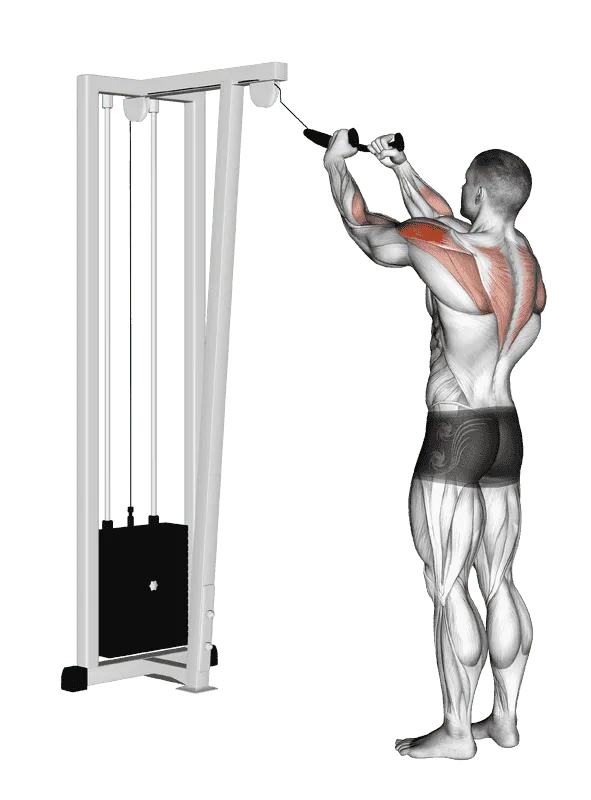
7 Cable Rear Delt Row (with Rope) - Sets
- 2–3
- Reps
- 12–20
- Rest
- 60 s
-
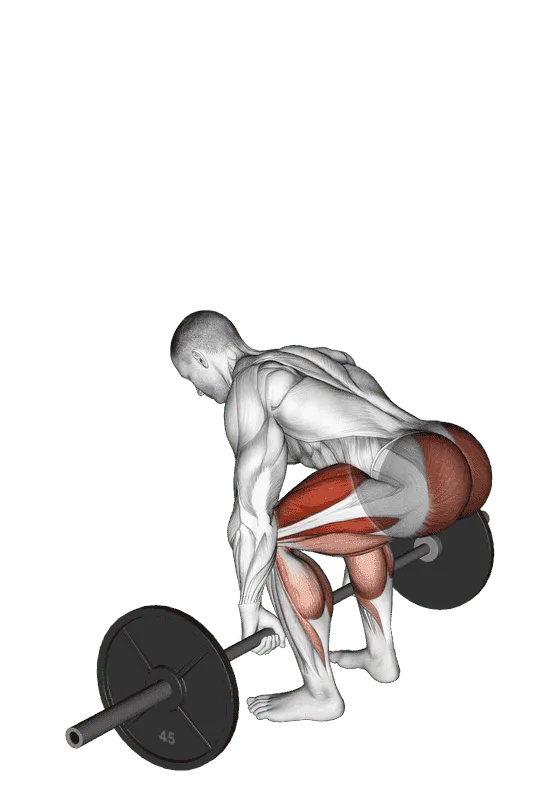
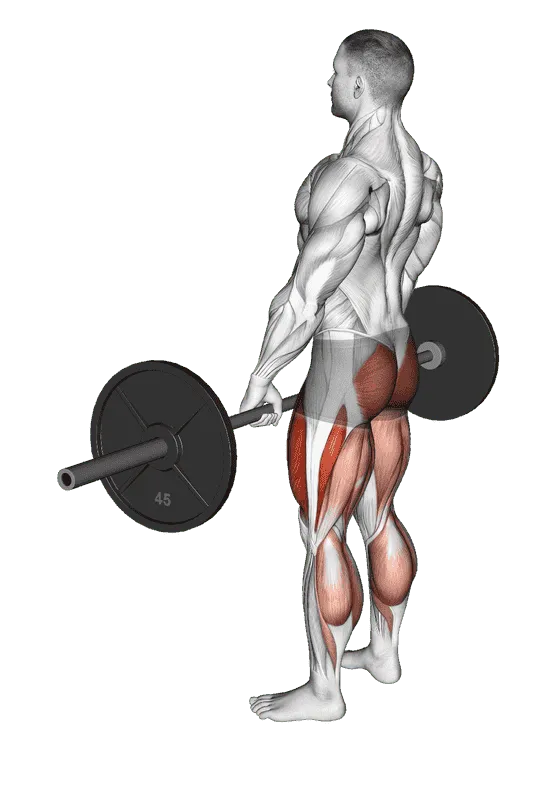
8 Barbell Deadlift - Sets
- 2–3
- Reps
- 3–6
- Rest
- 180 s
-
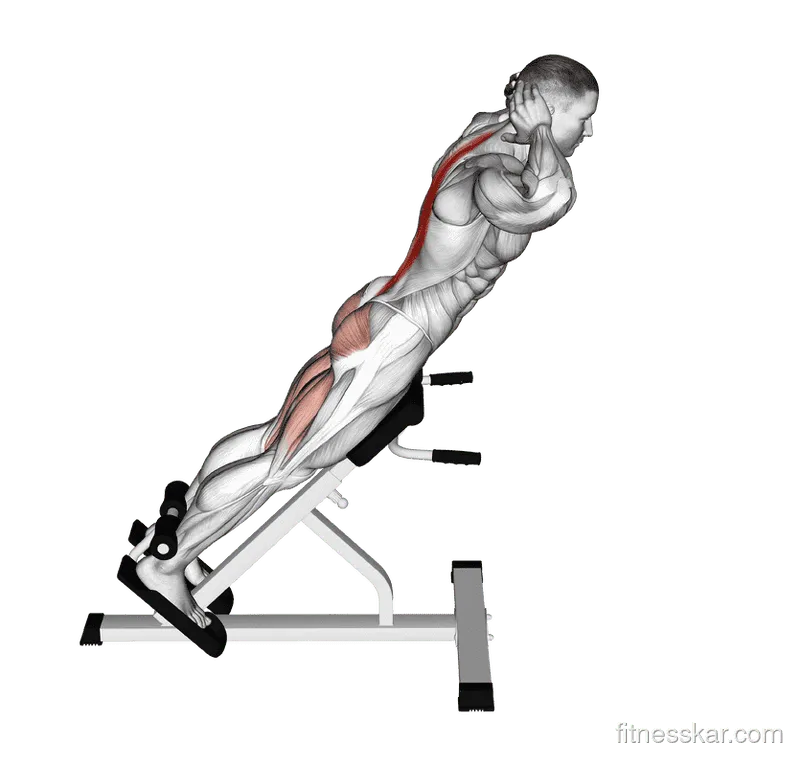
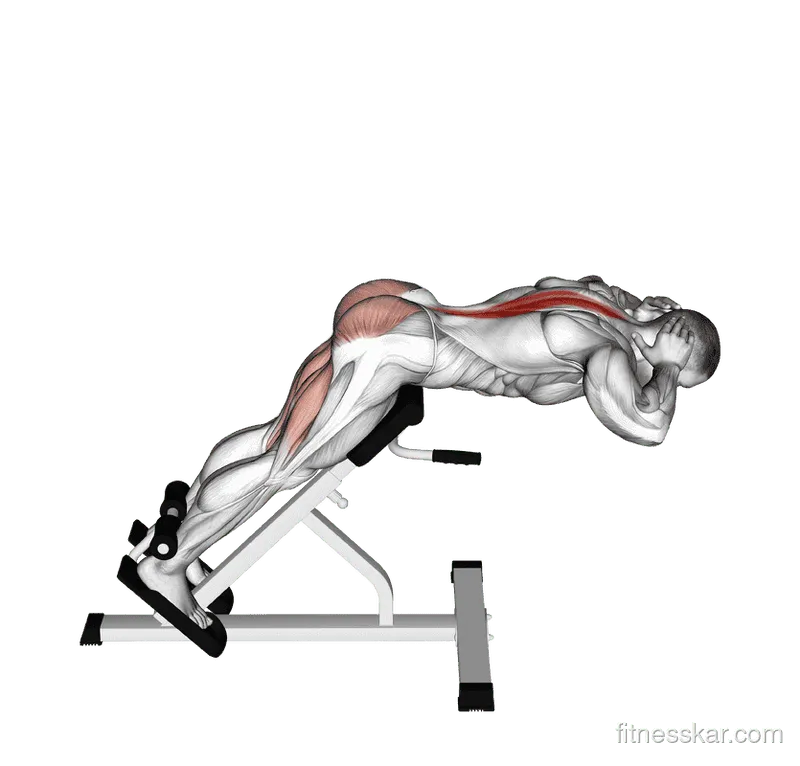
9 Hyperextension - Sets
- 2–3
- Reps
- 10–15
- Rest
- 90 s
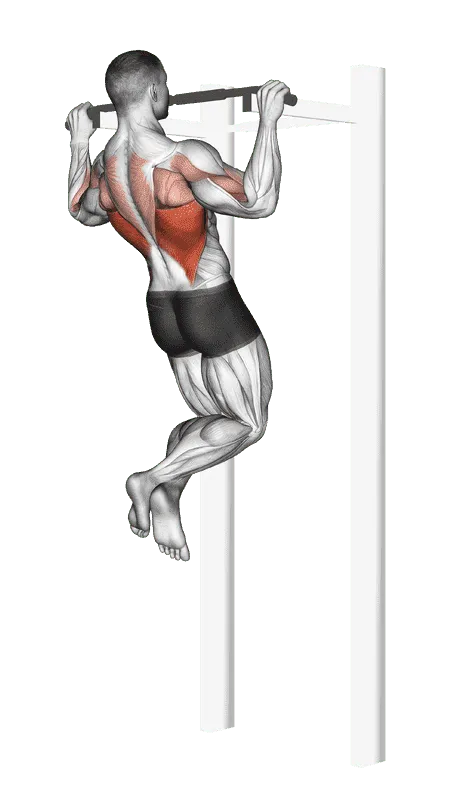


1. Pull-up
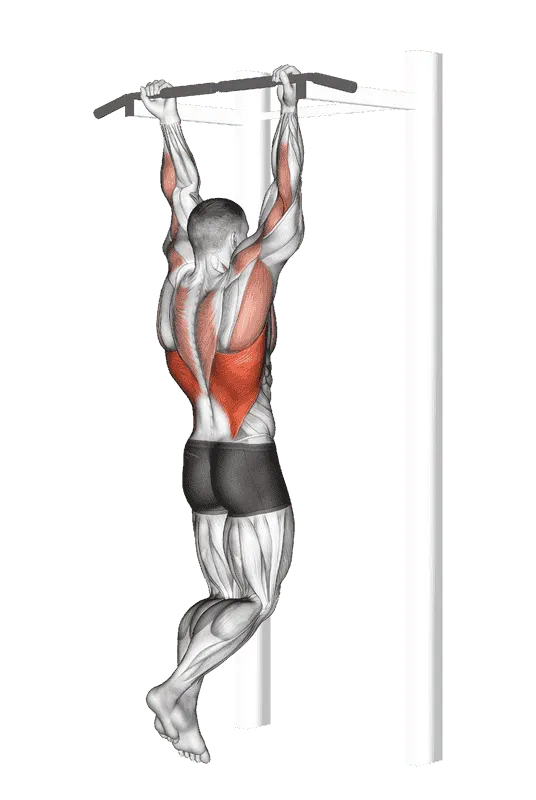
The pull-up is the king of vertical pulls. It builds the lats and lower traps, and it scales with you: start with the band-assisted pull-up or the assisted pull-up machine, then add weight with a belt once you can do sets of 10. An EMG study found similar lat activity in the pull-up and the underhand chin-up; the chin-up worked the biceps and pecs harder, while the pull-up worked the lower traps harder.[2] Rotating both is a good idea.
- Start from a dead hang with your shoulders engaged, not shrugged up to your ears.
- Drive your elbows down toward your ribs and pull your chest up to the bar.
- Lower all the way to straight arms on every rep.
2. Lat pulldown
The lat pulldown trains the same pattern as the pull-up with a load you can set exactly, which makes it ideal for beginners and for higher-rep work. In a comparison of hand positions, a wide grip pulled to the front of the chest produced more lat activity than a behind-the-neck pull, a close grip or an underhand grip.[3] Your focus matters too: in a small study of women new to lifting, lat activity during the pulldown rose after they were coached to concentrate on their lats.[4]
- Grip the bar a little wider than your shoulders and lean back slightly.
- Pull the bar to your upper chest, leading with your elbows.
- Let the bar rise until your arms are straight, and never pull it behind your neck.
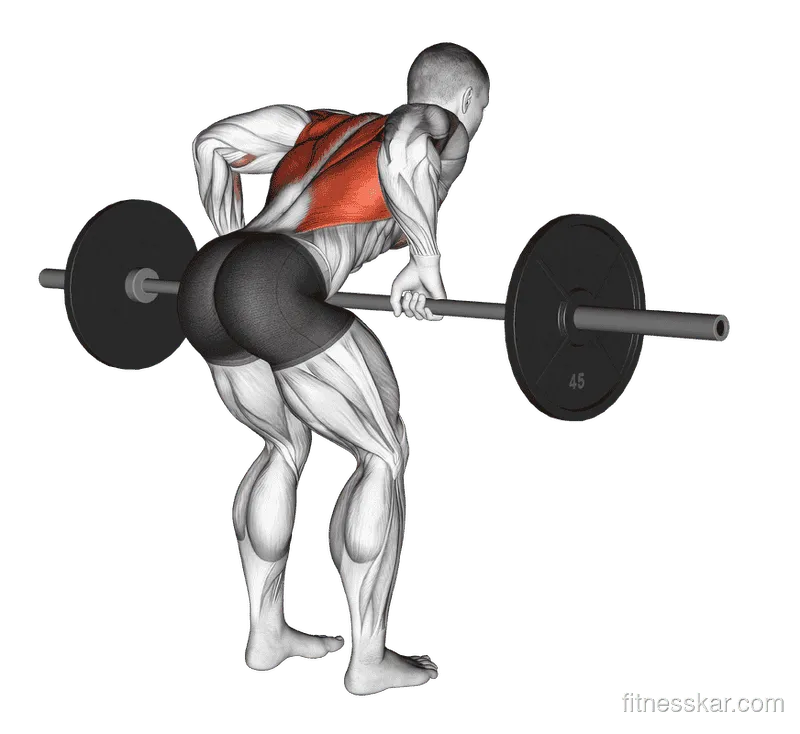
3. Barbell bent-over row
The barbell bent-over row is the heaviest row you can do and builds thickness across your entire back. It also demands a strong, braced torso: in a study of different rows, the standing bent-over row activated the back muscles strongly but placed the highest load on the lower spine.[5]
- Hinge until your torso is between parallel and about 45 degrees to the floor, knees soft.
- Brace your abs and keep your back flat.
- Row the bar to your lower ribs, pause briefly, and lower it with control.
If your lower back is sensitive, choose the chest-supported or one-arm row instead. The same study found the inverted row put the least load on the spine.
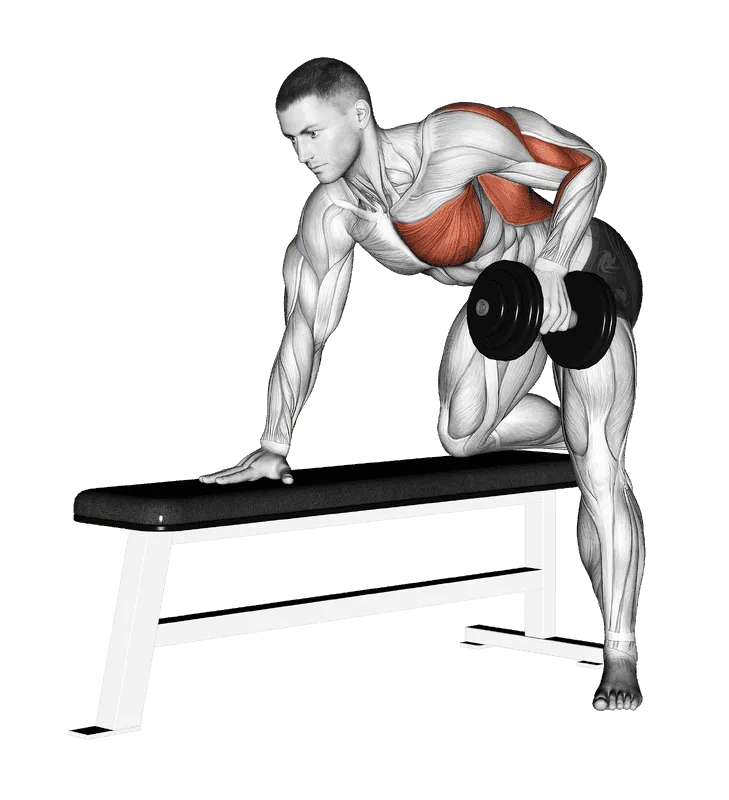
4. One-arm dumbbell row
Done with one knee and hand on a bench, the dumbbell bent-over row supports your spine, gives you a long range of motion, and lets you fix left-right imbalances.
- Keep your back flat and your shoulders level.
- Let the dumbbell hang for a full stretch, then pull it toward your hip.
- Don't twist your torso to heave the weight up.
5. Chest-supported T-bar row
On the lever T-bar row, your chest rests on a pad, so your lower back is out of the equation and you can push your upper back close to failure. It's an excellent second row in any session.
- Set the pad so you can reach the handles with straight arms.
- Keep your chest on the pad throughout the set.
- Pull your elbows back and squeeze your shoulder blades together at the top.
6. Seated cable row
The cable seated row gives constant tension and a big stretch at the start of every rep. In the lat comparison mentioned above, it had one of the best ratios of lat to biceps activity.
- Sit tall with a slight bend in your knees.
- Let your shoulders reach forward for the stretch without rounding your lower back.
- Row the handle to your belly and squeeze your shoulder blades together.
7. Face pull
The cable rear delt row with a rope, better known as the face pull, targets the rear delts and the mid and lower traps, which heavy rows don't always fully train. It's a great finisher that balances out all the pressing you do.
- Set the pulley between chest and face height and hold the rope with your palms facing each other.
- Pull the rope toward your face with your elbows high and wide.
- Pause, squeeze your shoulder blades, then return slowly.
8. Barbell deadlift
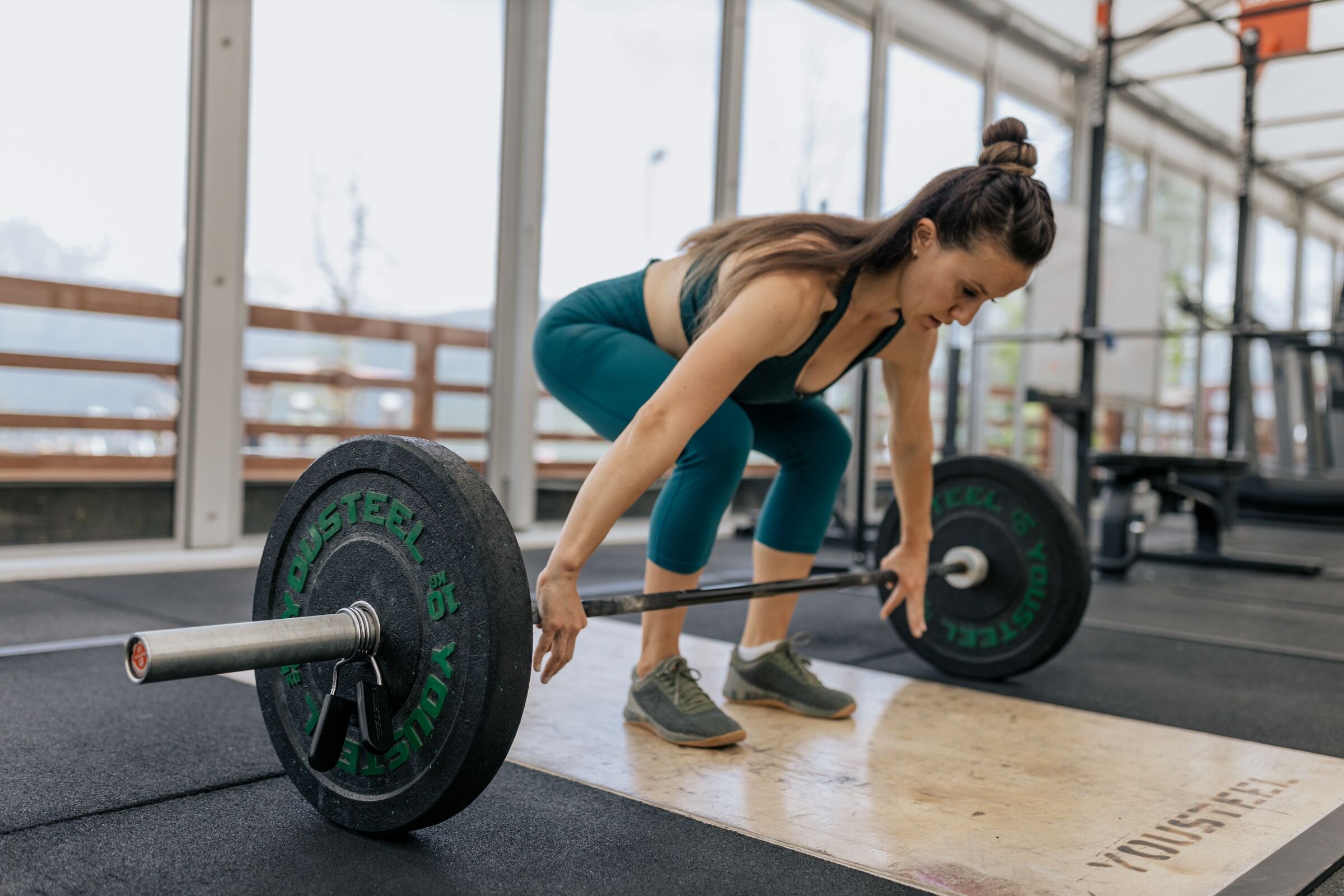
The barbell deadlift trains your entire back side, from the spinal erectors and traps to the glutes and hamstrings. It isn't mandatory for a big back, but few exercises build as much overall strength. Keep the reps low to moderate and the quality high; our guide on how to deadlift walks through the technique step by step.
- Stand with the bar over your mid-foot and grip it just outside your legs.
- Brace hard, pull the slack out of the bar, and push the floor away.
- Keep the bar close and your back flat, and finish standing tall without leaning back.
9. Back extension
The hyperextension, or back extension, trains your spinal erectors directly with low risk, and it hits your glutes and hamstrings too. Start with bodyweight, then hold a plate to your chest.
- Set the pad just below your hip bones.
- Lower your torso with a flat back until you feel a stretch in your hamstrings.
- Rise until your body forms a straight line, without arching hard at the top.
How to program your back training
Train your back twice a week. In each session, do one vertical pull and one or two horizontal pulls, then add a rear-delt or lower-back exercise. Weekly volume drives growth here as it does for every muscle: in a large meta-analysis, more weekly sets meant more muscle gain.[6] Most lifters do well with 10 to 20 weekly sets for the back; our guide to sets per muscle per week explains how to find your number. On a push/pull/legs split, these exercises fill your pull days.
| Level | Back sets per week | Workout A | Workout B |
|---|---|---|---|
| Beginner | 10 | Lat pulldown 3 × 8-12, one-arm dumbbell row 2 × 8-12 | Seated cable row 3 × 10-12, back extension 2 × 10-15 |
| Intermediate | 16 | Pull-up 3 × 6-10, barbell row 3 × 6-10, face pull 2 × 12-20 | Lat pulldown 3 × 8-12, T-bar row 3 × 8-12, back extension 2 × 10-15 |
| Advanced | 20 | Deadlift 3 × 3-6, pull-up 4 × 6-10, barbell row 3 × 6-10 | Lat pulldown 3 × 8-12, T-bar row 3 × 8-12, seated cable row 2 × 10-12, face pull 2 × 12-20 |
Want a ready-made back day? This free, beginner-friendly routine runs for three weeks, moving from heavy pulls to higher-rep work. You can also browse every back exercise in the library.
Common back-training mistakes
- Pulling with your arms. Think about driving your elbows down and back, not about curling the weight. Your hands are just hooks.
- Using momentum. Swinging your torso on rows or leaning far back on pulldowns shifts work away from your back. Use a weight you can pause at the top.
- Shrugging during pulldowns. Keep your shoulders down and away from your ears as you pull.
- Rounding your lower back. Heavy rows and deadlifts are safest with a braced, neutral spine. If your back rounds, the weight is too heavy for now.
- Skipping the stretch. Let your arms straighten fully at the start of each rep so your lats work through their whole range.
- Doing only one kind of pull. Pulldowns without rows, or rows without vertical pulls, leave part of your back undertrained.
Frequently asked questions
Frequently asked questions
Are pull-ups or lat pulldowns better for a wider back?
Both train the same pattern. Pull-ups are harder and need no machine; pulldowns let you set the exact load, which makes them easier to progress for beginners. Use whichever gives you more hard, full-range reps, or rotate both.
How do I get a wider back?
Build your lats with vertical pulls and rows, train them twice a week with enough hard sets, and keep your body fat moderate so the shape shows. Broad shoulders from lateral raises also add to the look.
Do I need deadlifts to build my back?
No. Deadlifts build overall strength and the lower back, but you can build big lats and a thick upper back with rows and pulldowns alone. Back extensions are a lower-risk way to train the lower back.
How many back exercises should I do per workout?
Two to four: one vertical pull, one or two rows, and optionally a face pull or back extension.
What grip should I use for pulldowns?
A grip slightly wider than your shoulders, pulled to the front of your chest, is a good default. Close and underhand grips are fine for variety, though in one comparison they produced less lat activity than a wide grip pulled to the front.
Sources
- Lehman GJ, Buchan DD, Lundy A, Myers N, Nalborczyk A. Variations in muscle activation levels during traditional latissimus dorsi weight training exercises: an experimental study. Dynamic Medicine. 2004. pubmed.ncbi.nlm.nih.gov/15228624/ ↩
- Youdas JW, Amundson CL, Cicero KS, Hahn JJ, Harezlak DT, Hollman JH. Surface electromyographic activation patterns and elbow joint motion during a pull-up, chin-up, or perfect-pullup rotational exercise. Journal of Strength and Conditioning Research. 2010. pubmed.ncbi.nlm.nih.gov/21068680/ ↩
- Signorile JF, Zink AJ, Szwed SP. A comparative electromyographical investigation of muscle utilization patterns using various hand positions during the lat pull-down. Journal of Strength and Conditioning Research. 2002. pubmed.ncbi.nlm.nih.gov/12423182/ ↩
- Snyder BJ, Leech JR. Voluntary increase in latissimus dorsi muscle activity during the lat pull-down following expert instruction. Journal of Strength and Conditioning Research. 2009. pubmed.ncbi.nlm.nih.gov/19826307/ ↩
- Fenwick CM, Brown SH, McGill SM. Comparison of different rowing exercises: trunk muscle activation and lumbar spine motion, load, and stiffness. Journal of Strength and Conditioning Research. 2009. pubmed.ncbi.nlm.nih.gov/19620925/ ↩
- Schoenfeld BJ, Ogborn D, Krieger JW. Dose-response relationship between weekly resistance training volume and increases in muscle mass: a systematic review and meta-analysis. Journal of Sports Sciences. 2017. pubmed.ncbi.nlm.nih.gov/27433992/ ↩