Building bigger, more defined arms requires more than just mindlessly curling light dumbbells until your forearms burn. To maximize arm circumference and achieve balanced muscular development, you must systematically train all five distinct anatomical compartments of the upper arm: the long and short heads of the biceps brachii, the deeper brachialis, and the lateral, medial, and long heads of the triceps brachii. Because your triceps account for roughly 60 percent of your total upper-arm volume, prioritizing elbow extension alongside elbow flexion is the fastest route to noticeable arm growth.
Below, we break down the eight best science-backed arm exercises, explain the biomechanical principles that make them superior, and provide actionable set, rep, and loading prescriptions to program them into your weekly training split.
Functional anatomy: How your arms actually grow
To select the most effective exercises, you must first understand how the muscles of the upper arm are structured and how their lines of pull dictate force production.
The biceps brachii and brachialis
The front of your upper arm consists of two primary muscle groups that govern elbow flexion and forearm supination:
- The Biceps Brachii (Long Head and Short Head): Both heads originate on the scapula (shoulder blade) and insert onto the radial tuberosity of the forearm. Because the biceps crosses both the shoulder and elbow joints, it acts as a two-joint (bi-articular) muscle. The lateral long head forms the outer portion of the arm and contributes heavily to the biceps "peak." It is placed under maximum passive stretch when your shoulder is extended behind your torso (as in an incline bench curl). The medial short head forms the inner arm mass and thickness, and is emphasized when the upper arm is positioned in front of your body (as in a preacher curl). Crucially, the biceps is not only an elbow flexor; it is also the primary supinator of the forearm (turning your palm upward). Exercises that include active supination recruit more biceps motor units than static neutral-grip curls.
- The Brachialis: Positioned deep beneath the lower portion of the biceps, the brachialis originates on the lower humerus and inserts onto the ulna. Because the ulna does not rotate during supination or pronation, the brachialis is a pure elbow flexor. As it hypertrophies, it literally pushes the biceps brachii outward and upward, adding significant thickness to the mid-arm and upper-arm circumference. It is best overloaded when the forearm is in a neutral (palms facing each other) or pronated (palms down) position, which mechanically disadvantages the biceps brachii.
The triceps brachii
The triceps brachii comprises three distinct heads that join into a common tendon inserting onto the olecranon process of the ulna:
- The Long Head: The largest of the three heads, the long head originates on the infraglenoid tubercle of the scapula. Because it crosses the shoulder joint, it can only reach a fully lengthened position when your arm is elevated overhead. Training the triceps with your arms at your sides leaves the long head in an active insufficiency state, blunting its hypertrophy potential.
- The Lateral Head: Originating on the posterior humerus, the lateral head forms the prominent outer "horseshoe" shape visible from the side profile. It is a single-joint muscle activated heavily during heavy pressing, cable pushdowns, and dips.
- The Medial Head: Situated deep on the lower posterior humerus, the medial head is active across all elbow extension angles and provides crucial joint stability near lockout.
The science of arm hypertrophy: 3 non-negotiable drivers
Effective arm training relies on foundational physiological mechanisms rather than novelty:
1. Mechanical tension and the length-tension relationship
Mechanical tension is the primary stimulus for muscle protein synthesis (MPS). When muscle fibers contract forcefully against resistance while undergoing lengthening (eccentric action), mechanical sensors (mechanosensors) activate the intracellular mTORC1 pathway. To maximize tension, every working set should be taken within 1 to 3 repetitions in reserve (RIR) of concentric muscular failure.
2. Stretch-mediated hypertrophy
Recent exercise science research demonstrates that training a muscle at long muscle lengths produces superior hypertrophy compared to training exclusively at short muscle lengths. For example, groundbreaking research comparing triceps extensions performed overhead versus with arms neutral demonstrated that overhead training induced approximately 1.4-fold greater total triceps hypertrophy, driven primarily by massive increases in the long head.[1] Similarly, placing the biceps under passive stretch behind the torso during curls recruits higher-threshold motor units early in the range of motion.
3. Volume and frequency landmarks
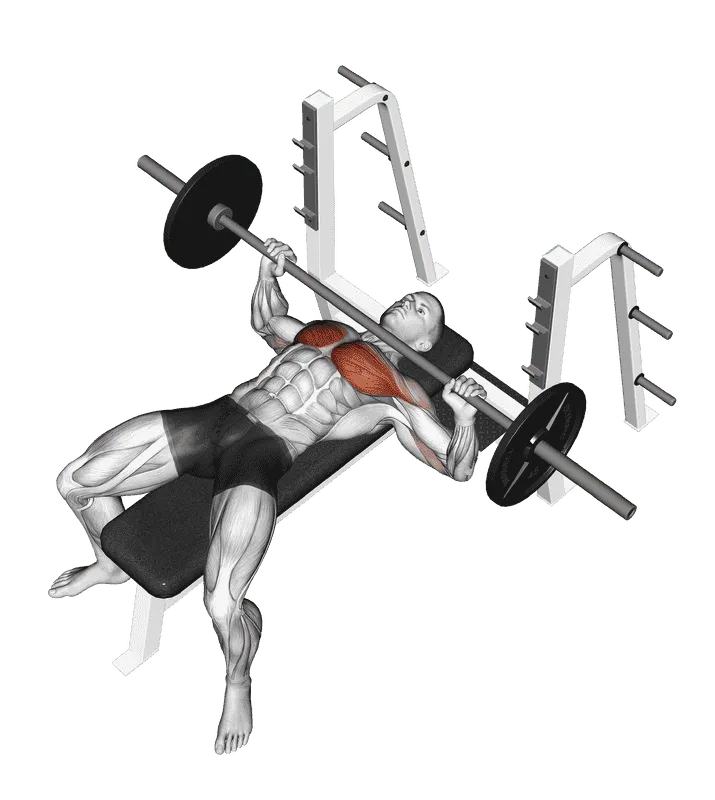
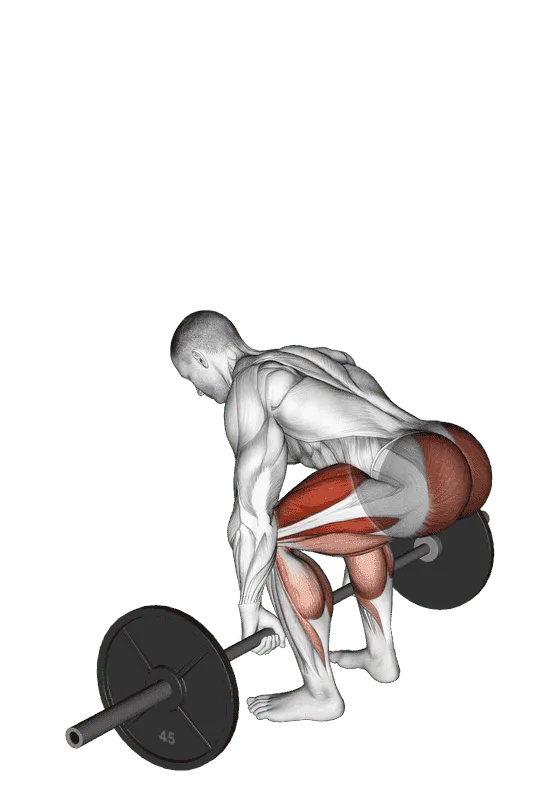
The arms receive substantial indirect stimulation from compound presses (such as the barbell bench press) and compound pulls (such as the barbell deadlift or pull-ups). Consequently, arms do not require 25 sets per workout to grow. According to volume meta-analyses, most lifters experience optimal hypertrophy between 10 and 20 total weekly sets per muscle group. For direct arm work:
- Minimum Effective Volume (MEV): 6–8 direct sets per week for lifters performing ample heavy compound pressing and rowing.
- Maximum Adaptive Volume (MAV): 10–14 direct sets per week for targeted arm specialization.
- Optimal Frequency: Splitting volume across 2 weekly sessions (e.g., 5–7 sets per session) maintains higher bar velocity, force output, and set quality than cramming all volume into a single marathon arm day.
Our comprehensive guide on how many sets per muscle per week details how to adjust volume based on your recovery capacity.
The 8 best arm exercises
Use these eight evidence-based movements as the core building blocks of your arm programming. Select two biceps movements and two triceps movements per workout rather than attempting all eight in a single session.
-
1 Barbell Curl - Sets
- 3–4
- Reps
- 6–8
- Rest
- 150 s
- Tempo
- 2–0–1
-

2 Dumbbell Incline Biceps Curl - Sets
- 3
- Reps
- 8–12
- Rest
- 120 s
- Tempo
- 3–0–1
-
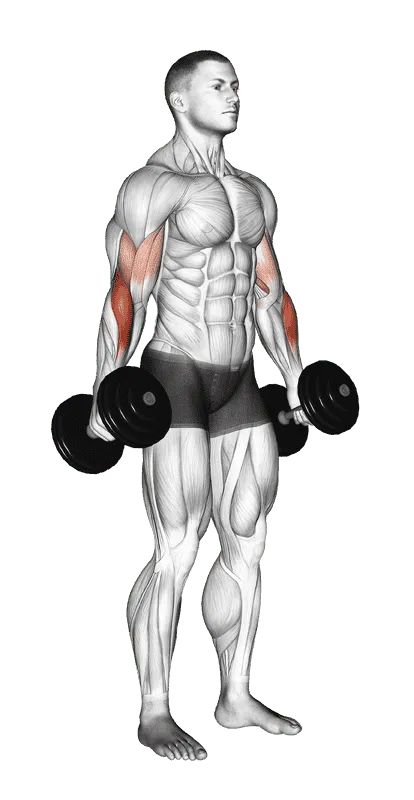
3 Dumbbell Hammer Curl - Sets
- 3
- Reps
- 10–12
- Rest
- 90 s
-
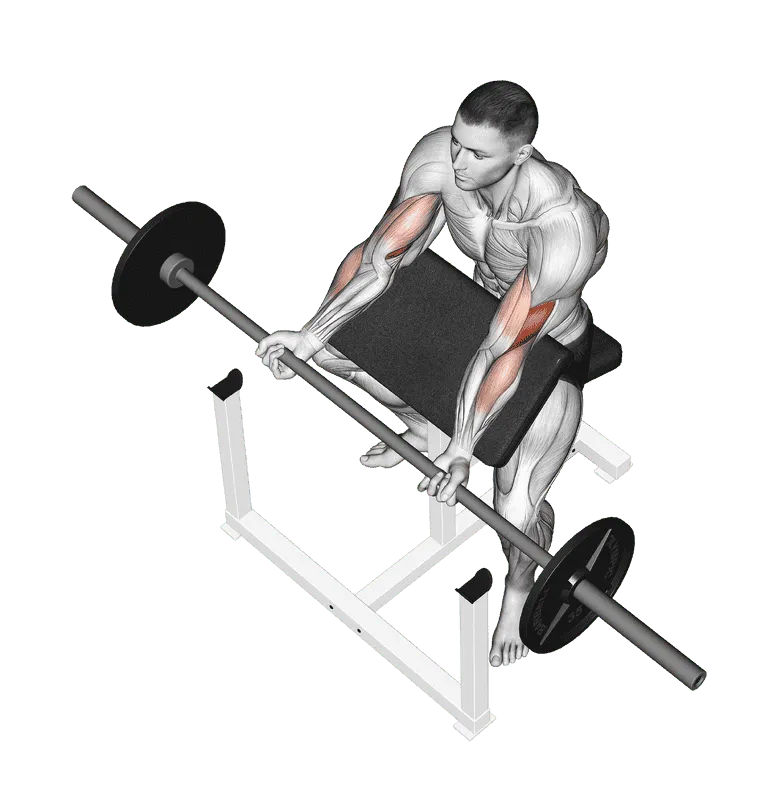
4 Barbell Preacher Curl - Sets
- 2–3
- Reps
- 10–15
- Rest
- 90 s
-
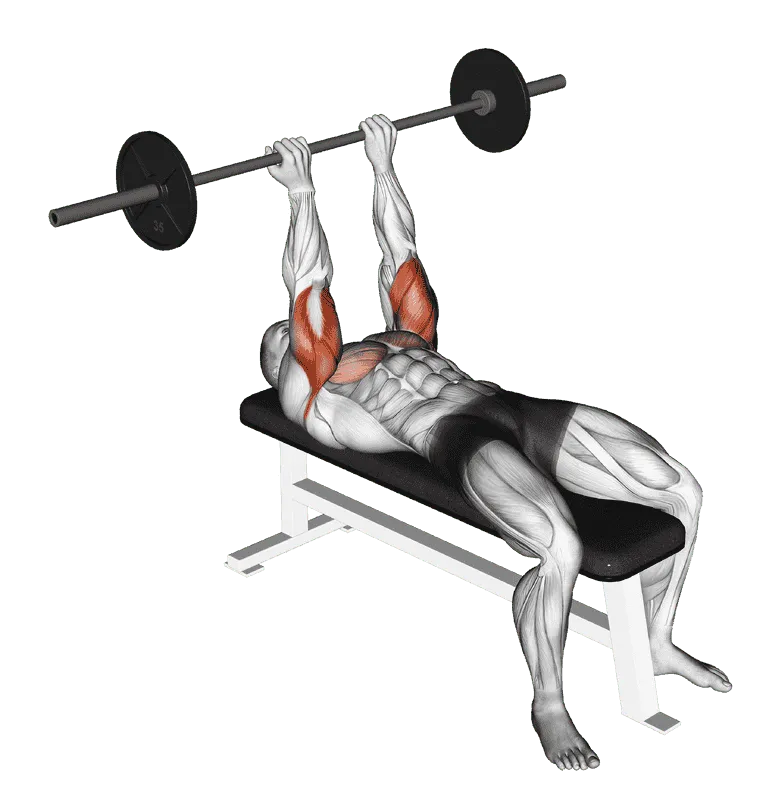
5 Barbell Lying Triceps Extension (Skull Crusher) - Sets
- 3–4
- Reps
- 8–10
- Rest
- 150 s
- Tempo
- 3–0–1
-
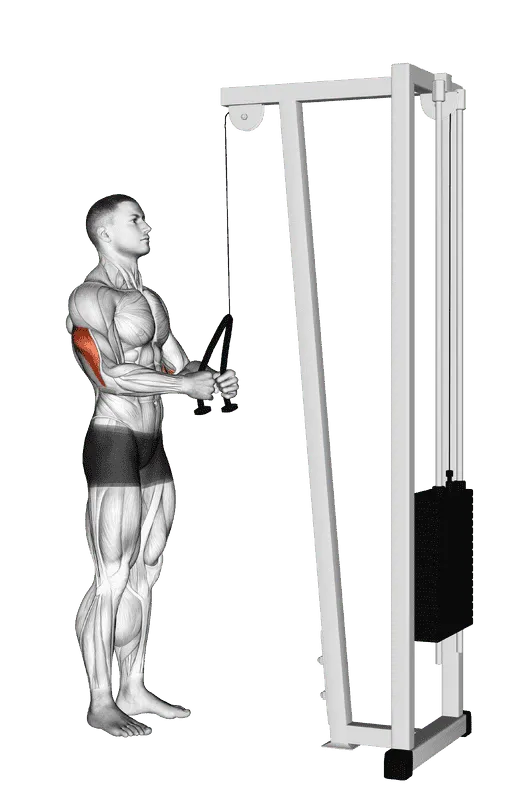
6 Cable Pushdown (with rope attachment) - Sets
- 3
- Reps
- 10–15
- Rest
- 90 s
-
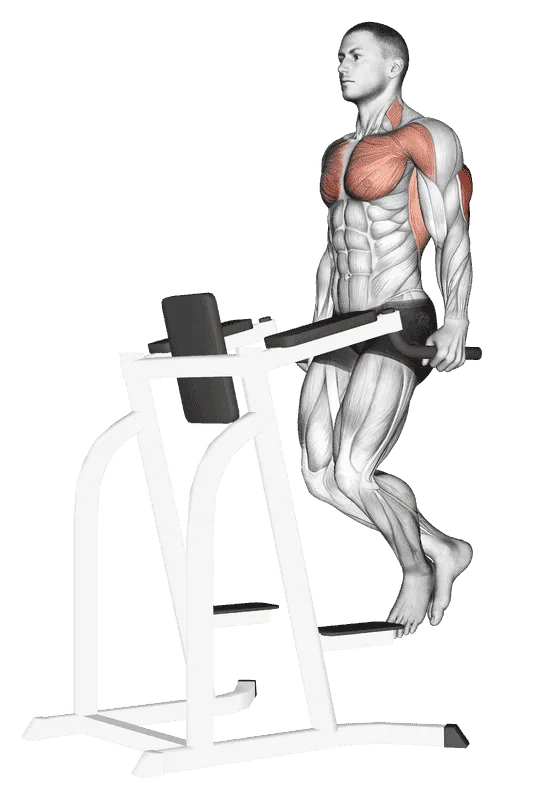
7 Triceps Dip - Sets
- 3
- Reps
- 6–10
- Rest
- 150 s
-

8 Barbell Standing Overhead Triceps Extension - Sets
- 2–3
- Reps
- 10–12
- Rest
- 120 s
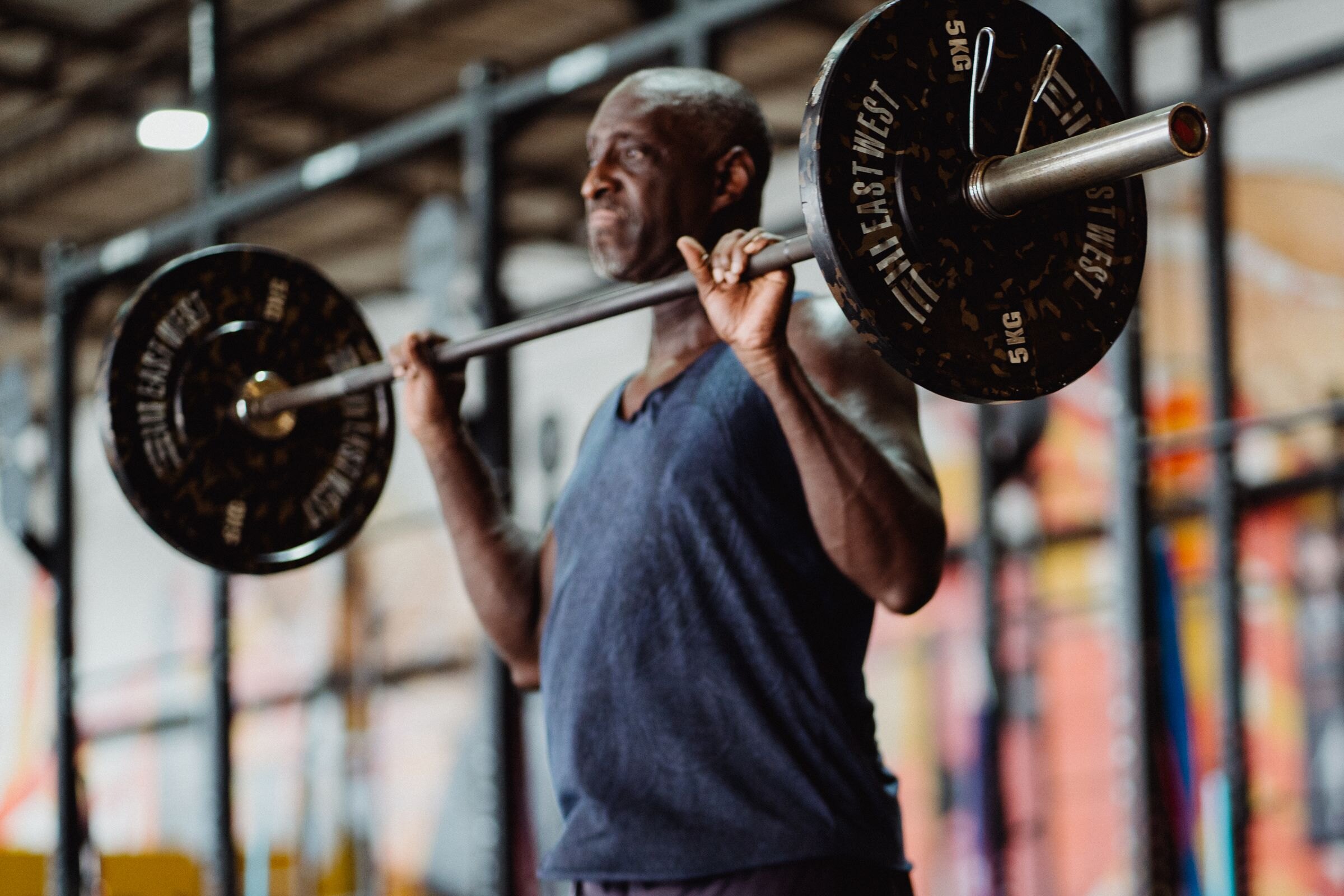
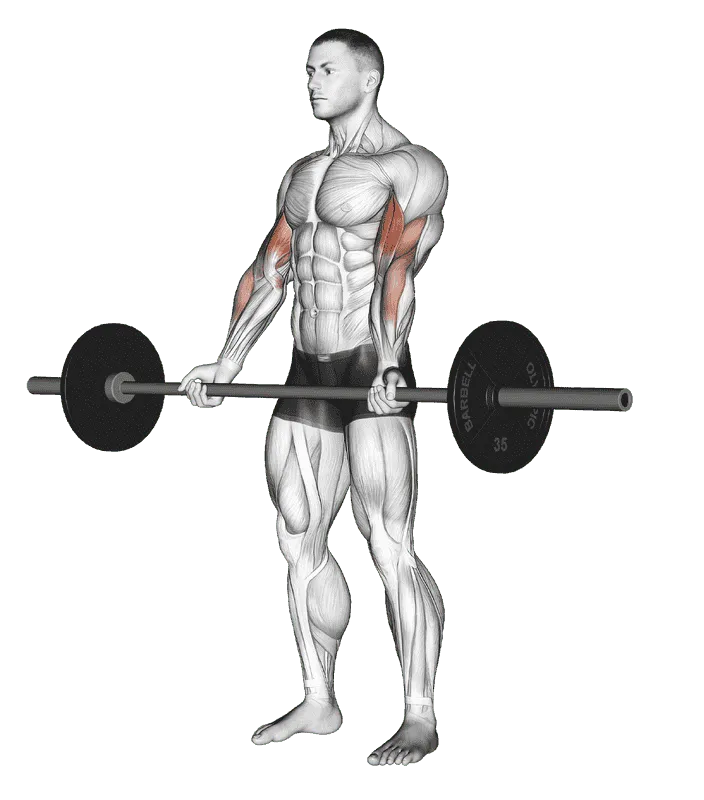
1. Standing barbell curl (Biceps mass builder)
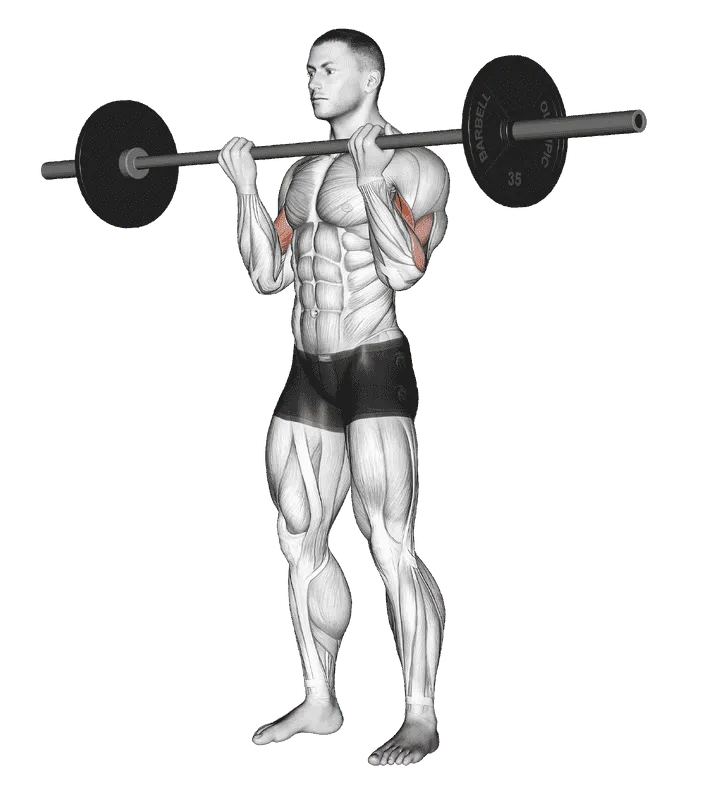
The standing barbell curl is the undisputed foundational movement for biceps overload. By utilizing a rigid barbell, you can handle heavier absolute loads than with dumbbells, creating immense mechanical tension across the entire biceps brachii.
- Sets
- 3–4
- Reps
- 6–8
- Rest
- 150 s
- Tempo
- 2–0–1
Biomechanical Execution:
- Stand with your feet shoulder-width apart, knees slightly unlocked, and grip an Olympic barbell with an underhand (supinated) grip just outside hip width.
- Depress and retract your scapulae to stabilize your shoulder girdle.
- Curl the bar along a gentle arc, keeping your elbows stationary against your ribcage. Allow your elbows to drift forward no more than one inch at the very peak of the contraction.
- Lower the bar through a controlled 2-second eccentric phase until your elbows are fully locked out.
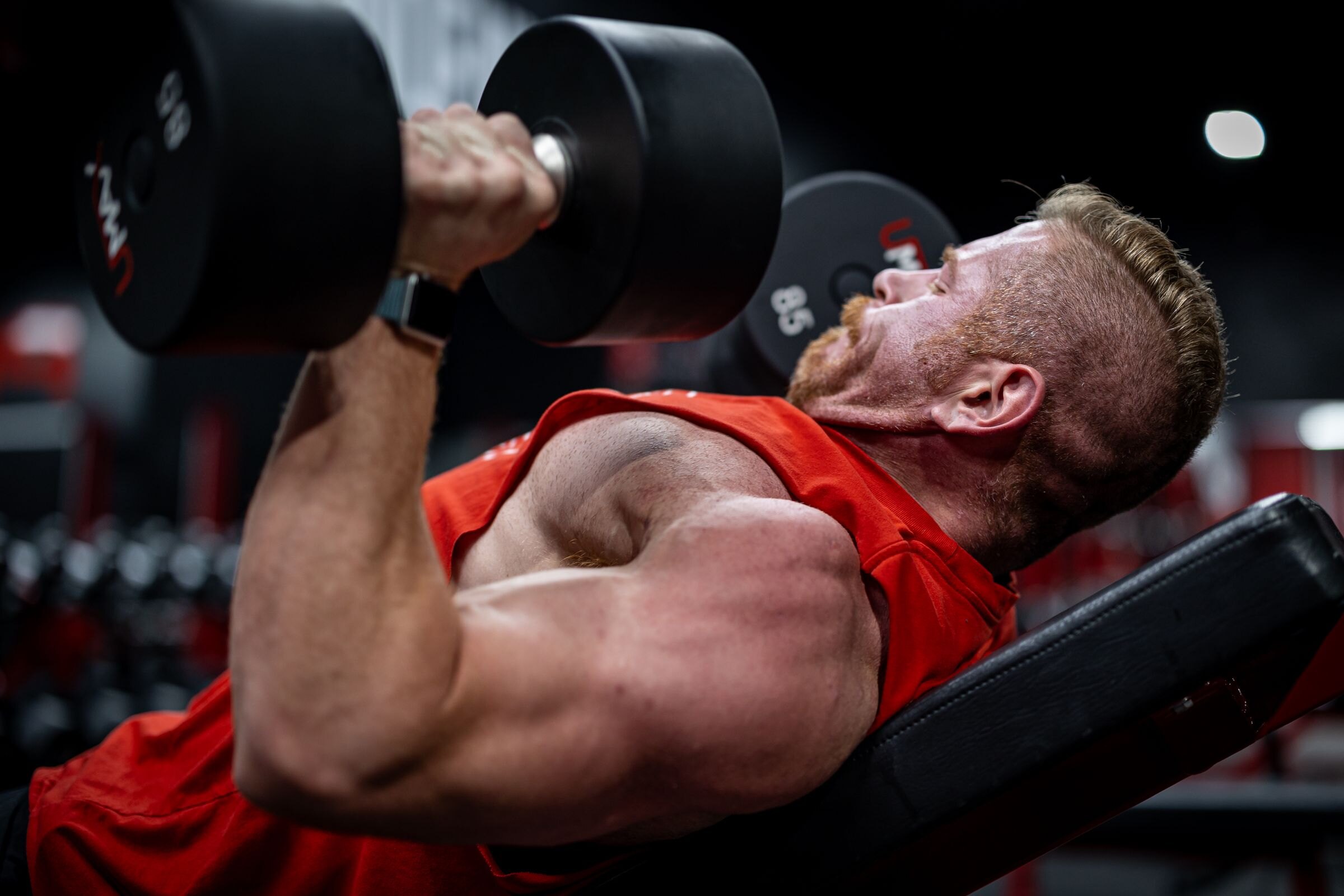
2. Incline dumbbell biceps curl (Long head stretch focus)
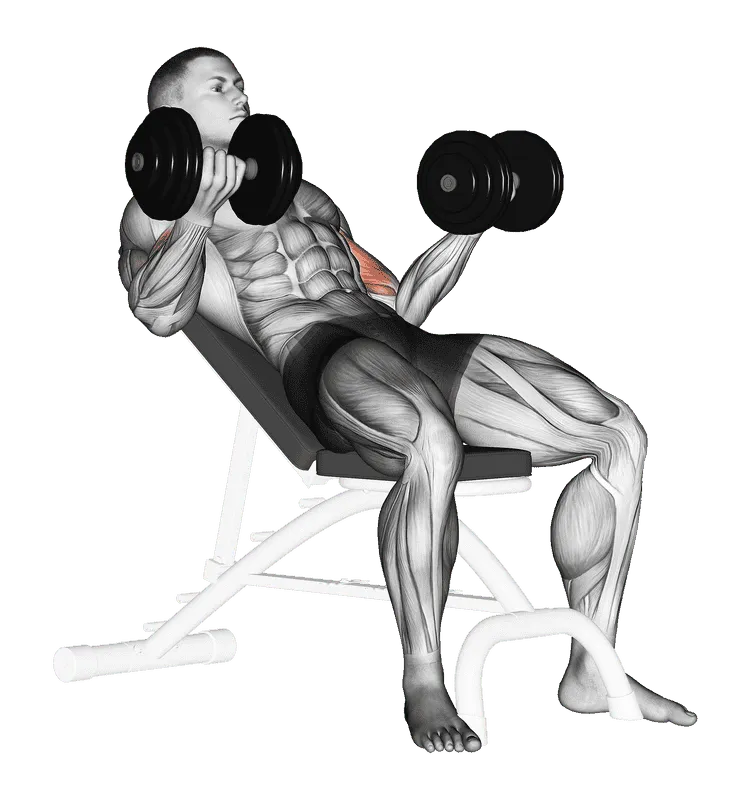
The incline dumbbell biceps curl is uniquely effective because it places the shoulder joint into passive extension. Because the biceps long head originates on the supraglenoid tubercle of the scapula, reclining backward on an inclined bench pulls the long head taut before the movement even begins.
- Sets
- 3
- Reps
- 8–12
- Rest
- 120 s
- Tempo
- 3–0–1
Biomechanical Execution:
- Set an adjustable bench to an incline angle between 45 and 60 degrees. Avoid reclining too flat (below 45 degrees), which places excessive anterior shear on the shoulder capsule.
- Sit back with your head, upper back, and hips pressed firmly into the pad, letting your arms hang vertically toward the floor.
- Begin curling with your palms facing inward (neutral), then actively supinate your wrists as you flex your elbows past 90 degrees.
- Emphasize the bottom stretch: pause for a split second at full elbow extension to exploit stretch-mediated mechanical tension before starting the next repetition.
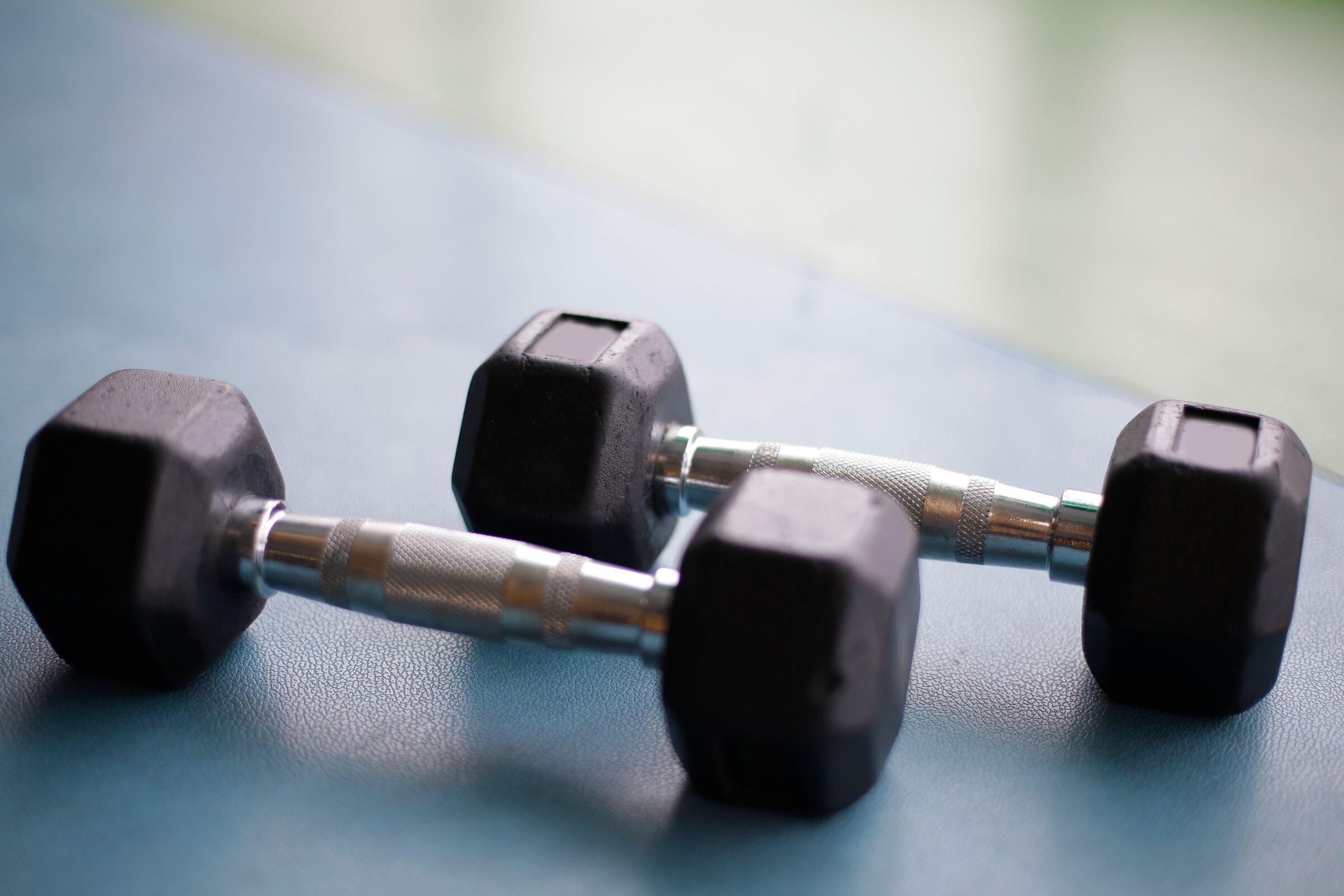
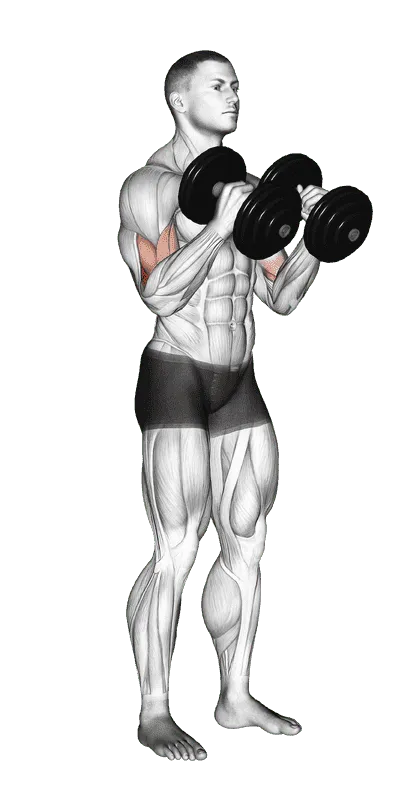
3. Dumbbell hammer curl (Brachialis & forearm thickness)
The dumbbell hammer curl utilizes a neutral grip (palms facing each other) throughout the entire repetition. By keeping the radial bone aligned neutrally with the humerus, the biceps brachii is placed at a mechanical disadvantage, shifting the lion's share of the load onto the brachialis and the brachioradialis of the forearm.
- Stand tall or sit upright with dumbbells resting at your sides.
- Curl the weights smoothly upward toward your shoulders without rotating your wrists.
- Squeeze firmly at peak contraction, then lower under strict control for 2 to 3 seconds.
- You can perform these alternating arm-by-arm to maximize neural drive, or simultaneously to maintain continuous muscular tension.
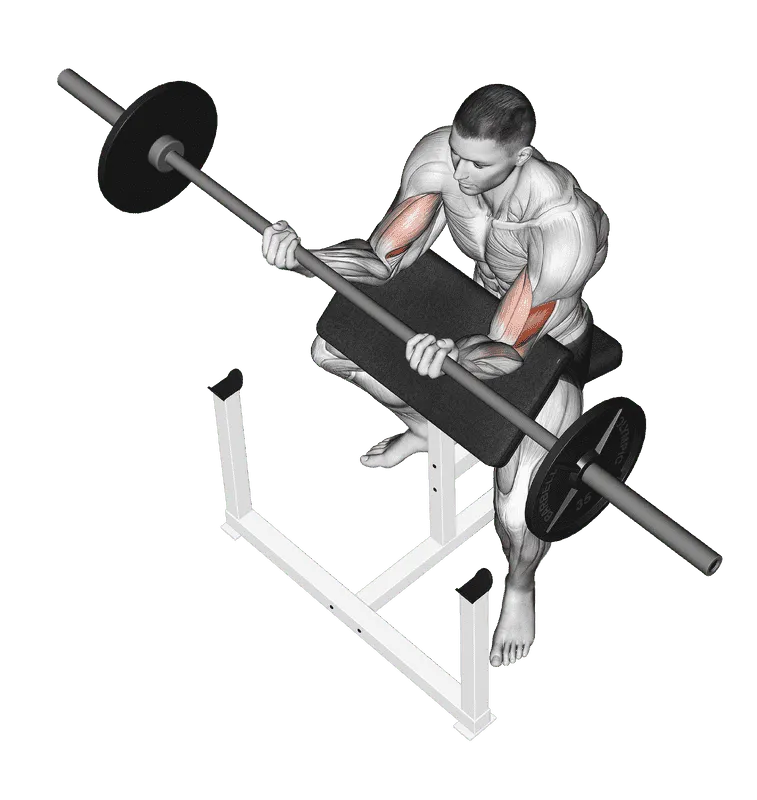
4. Barbell preacher curl (Short head peak tension)
The barbell preacher curl supports your upper arms on an angled pad (typically 45 degrees), anchoring your shoulder joint in passive flexion. This angle shifts the resistance curve: tension is highest during the first third of the repetition (when the elbow is extended) and drops off near the top.
- Adjust the preacher seat so that your armpits rest comfortably over the top edge of the pad without rounding your spine excessively.
- Grip the bar with hands shoulder-width apart.
- Lower the weight under complete control until your arms are nearly straight. Stop approximately 2 to 5 degrees short of hyperextending your elbows to protect the distal biceps tendon from excessive strain.
- Contract your biceps forcefully to raise the bar back to perpendicular alignment.
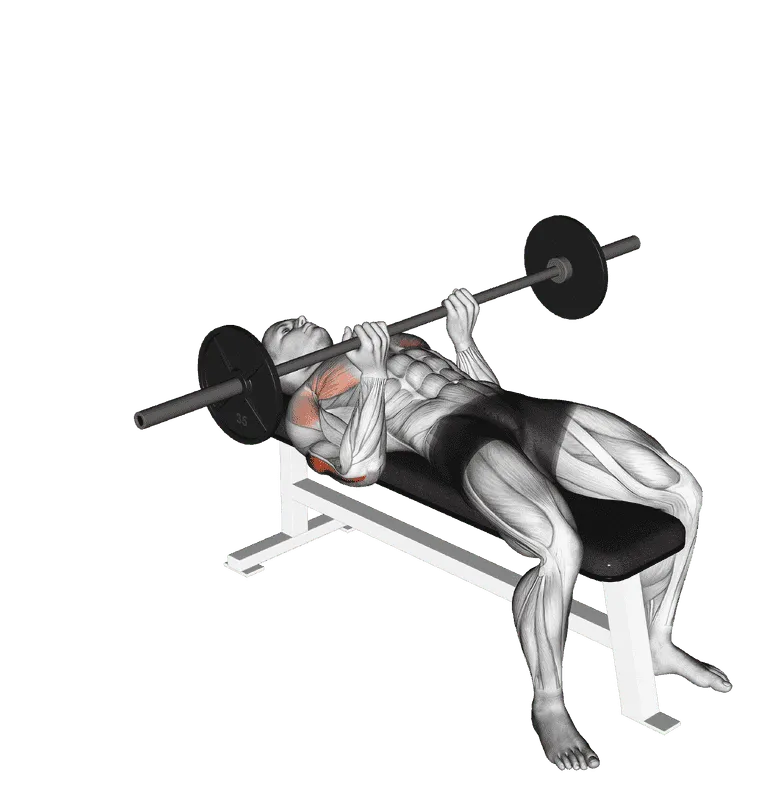
5. Barbell lying triceps extension / Skull crusher (Long and lateral heads)
The barbell lying triceps extension, commonly known as the skull crusher, is a potent compound-isolation exercise that provides consistent tension across the entire triceps complex.
- Sets
- 3–4
- Reps
- 8–10
- Rest
- 150 s
- Tempo
- 3–0–1
Biomechanical Execution:
- Lie supine on a flat bench holding an EZ-bar with an overhand grip, hands roughly 15 to 20 cm apart.
- Rather than holding the bar directly over your chest, lean your upper arms back approximately 15 degrees past vertical toward your head. This angle ensures that when your elbows extend, the weight does not balance passively over your shoulder joints.
- Keeping your elbows stationary, hinge purely at the elbow joint to lower the bar toward the crown of your head or just behind the bench.
- Drive the weight back up through elbow extension without allowing your elbows to flare outward.
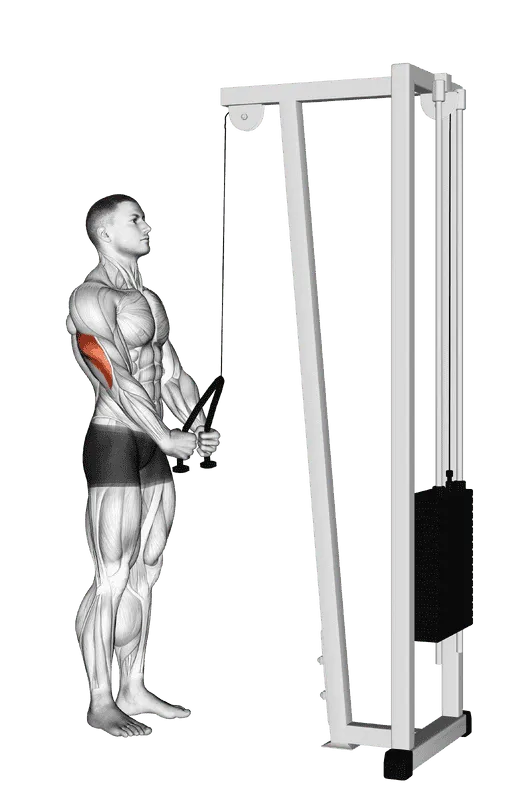
6. Cable pushdown with rope attachment (Lateral head focus)
The cable pushdown with rope attachment provides smooth, uninterrupted resistance throughout the entire range of motion, which free weights cannot match due to gravity. The rope attachment permits forearm pronation and flaring at the bottom, maximizing the contraction of the lateral head.
- Set the cable pulley to the highest notch and attach a flexible rope.
- Stand with a slight forward torso lean, pin your upper arms against your ribs, and grasp the rope with a neutral grip.
- Push downward by extending your elbows. As you reach full extension, actively spread the rope ends outward past your hips.
- Squeeze your triceps hard for one full second, then control the return until your forearms break 90 degrees of elbow flexion.
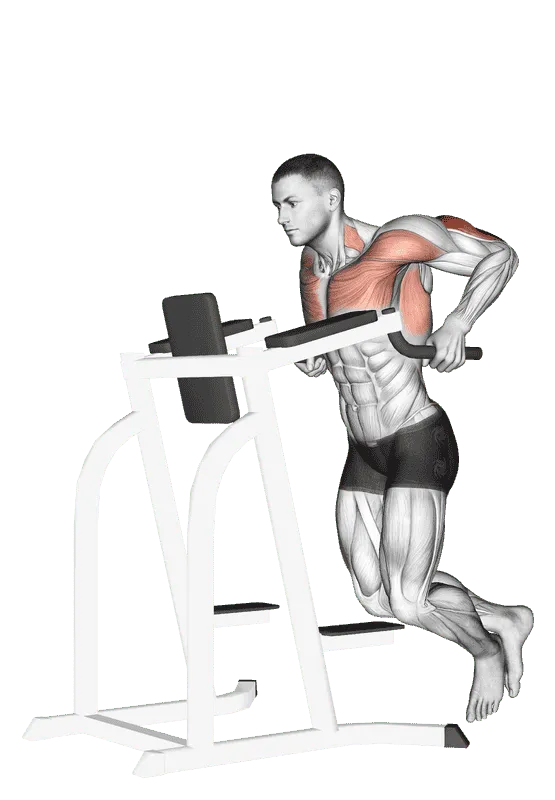
7. Triceps dip (Heavy compound lockout strength)
The triceps dip is the ultimate bodyweight mass builder for the upper body, recruiting the lateral and medial heads of the triceps, the lower pectoralis major, and the anterior deltoids. When performed with an upright posture, the triceps absorb the majority of the pressing torque.
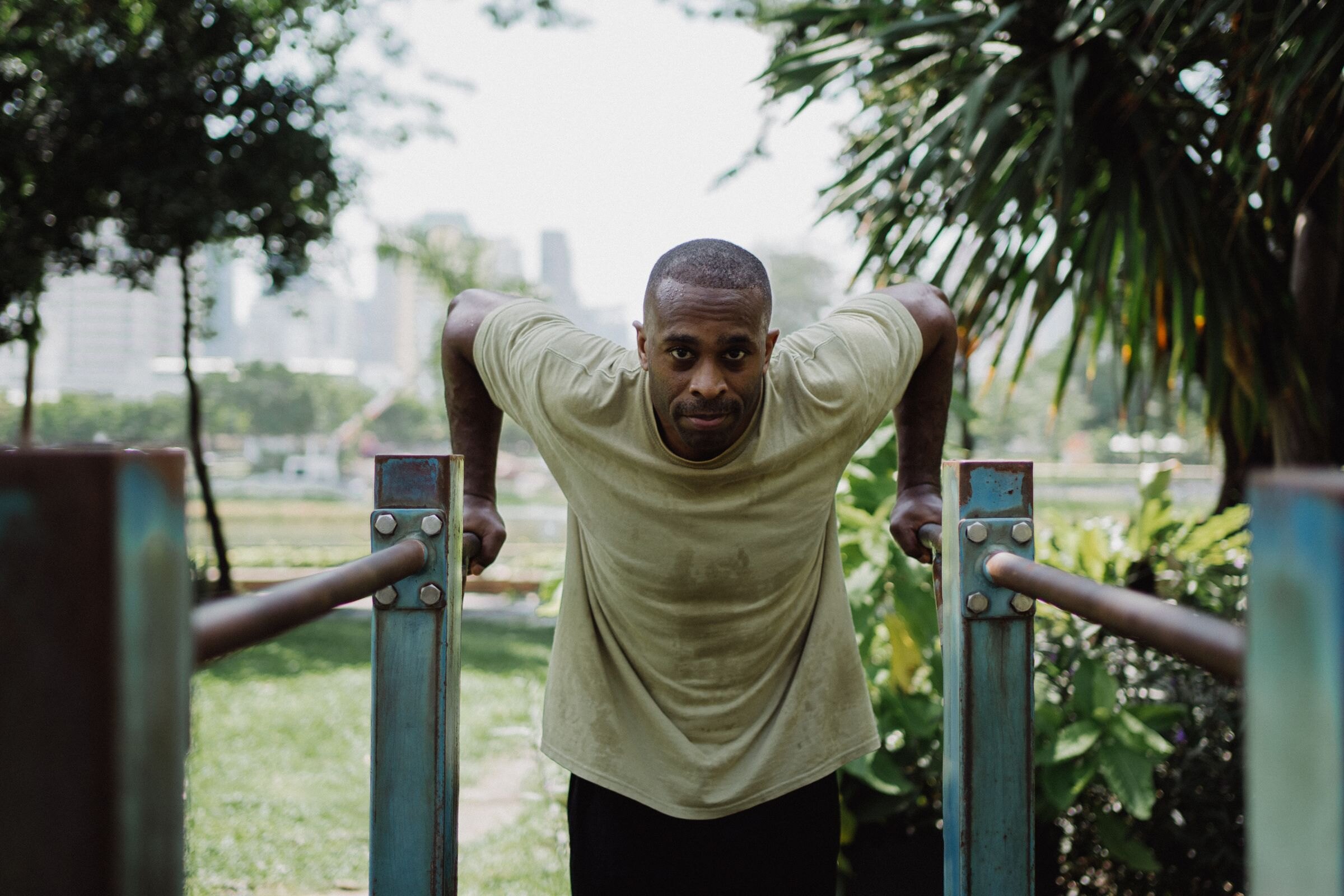
- Mount parallel dip bars with your arms locked out and shoulders depressed away from your ears.
- Maintain an upright torso (avoid excessive forward leaning, which shifts tension to the chest) and keep your elbows tucked relatively close to your sides.
- Lower yourself until your upper arms reach roughly 90 degrees of elbow flexion. Avoid sinking deeper if you experience anterior shoulder capsule discomfort.
- Press powerfully through your palms to lock out your elbows completely at the top. Once you can achieve 12 to 15 strict bodyweight repetitions, add a weight belt to continue applying progressive overload.
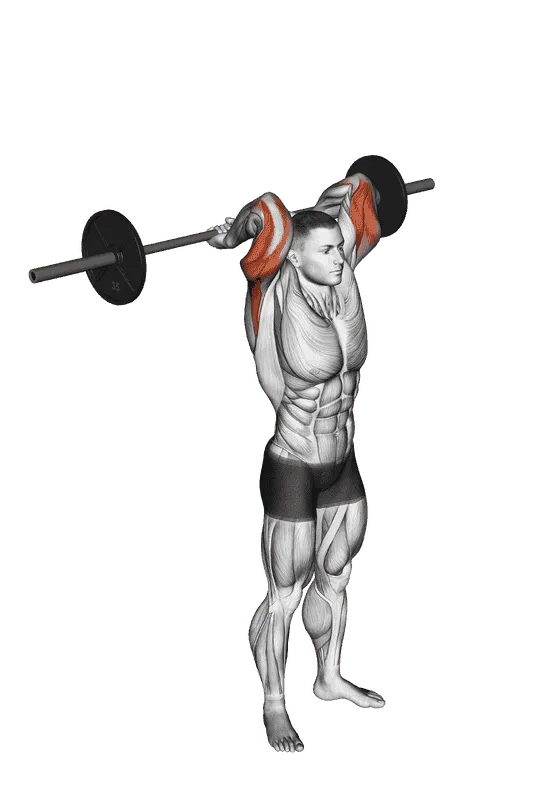
8. Barbell standing overhead triceps extension (Maximal long head stretch)
The barbell standing overhead triceps extension positions the arms completely overhead, placing the long head of the triceps into an extreme passive stretch. In accordance with recent stretch-mediated hypertrophy findings,[1] this movement is essential for complete triceps development.
- Stand tall with your core braced, holding an EZ-curl bar directly overhead with arms extended.
- Keeping your upper arms close to your ears and pointing toward the ceiling, hinge at your elbows to lower the bar behind your neck.
- Feel the deep stretch in your triceps at the bottom, then extend your elbows to press the bar back overhead. Maintain strict spinal alignment to avoid hyperextending your lower back.
Practical programming: Weekly arm development protocols
To turn these exercises into consistent muscle gains, you must integrate them into a well-structured split. The table below outlines how to organize your arm volume across a standard 4-day Upper/Lower or 6-day Push/Pull/Legs program.
| Workout | Movement | Target Muscle | Sets | Reps | Rest | Tempo |
|---|---|---|---|---|---|---|
| Pull Day (Session A) | Barbell Curl | Biceps (Overall / Long Head) | 3–4 | 6–8 | 150s | 2-0-1 |
| Pull Day (Session A) | Dumbbell Hammer Curl | Brachialis & Forearms | 3 | 10–12 | 90s | 2-0-1 |
| Push Day (Session A) | Skull Crusher | Triceps (Overall / Long Head) | 3–4 | 8–10 | 150s | 3-0-1 |
| Push Day (Session A) | Cable Pushdown (Rope) | Triceps (Lateral Head) | 3 | 10–15 | 90s | 2-0-1 |
| Pull Day (Session B) | Incline Dumbbell Curl | Biceps (Long Head Stretch) | 3 | 8–12 | 120s | 3-0-1 |
| Pull Day (Session B) | Barbell Preacher Curl | Biceps (Short Head Peak) | 3 | 10–15 | 90s | 2-0-1 |
| Push Day (Session B) | Triceps Dip | Triceps (Lockout Power) | 3 | 6–10 | 150s | 2-0-1 |
| Push Day (Session B) | Overhead Extension | Triceps (Long Head Stretch) | 3 | 10–12 | 120s | 3-0-1 |
If your goal is total body mass with an emphasis on upper-body proportions, combine these exercises with our full-body workout programming:
You can also cross-reference our best back exercises and best chest exercises to understand how compound movements complement your arm isolation.
Frequently asked questions
Frequently asked questions
Can I build big arms using only compound exercises like pull-ups and bench presses?
While compound presses and pulls provide significant baseline stimulation, research shows that direct isolation work produces superior regional muscle hypertrophy. Multi-joint movements do not challenge the biceps and triceps across full ranges of motion—particularly at long muscle lengths—making dedicated direct sets essential for maximum growth.
How many times per week should I train my arms?
Training arms twice per week is optimal for most natural lifters. Distributing 10 to 14 total weekly sets across two sessions allows you to generate higher mechanical tension and maintain greater rep performance compared to doing all your sets in a single weekly arm workout.
Should I train triceps or biceps first in an arm workout?
Train your lagging muscle group first. If your triceps need more development, perform your heavy triceps movements at the start of the workout when central nervous system fatigue is lowest and force output is highest. If both are equal, you can alternate between a biceps movement and a triceps movement.
Why are my arms not growing despite heavy lifting?
The most common culprits are insufficient direct volume, lack of progressive overload, and swinging the weights using momentum. Focus on strict form with a 2-to-3-second eccentric contraction, take your sets within 1 to 2 reps of true failure, and ensure you are eating a slight caloric surplus with adequate daily protein.
Sources
- Maeo S, Wu Y, Huang M, et al. Triceps brachii hypertrophy is substantially greater after elbow extension training performed in the overhead versus neutral arm position. European Journal of Sport Science. 2023. doi.org/10.1080/17461391.2022.2100279 ↩