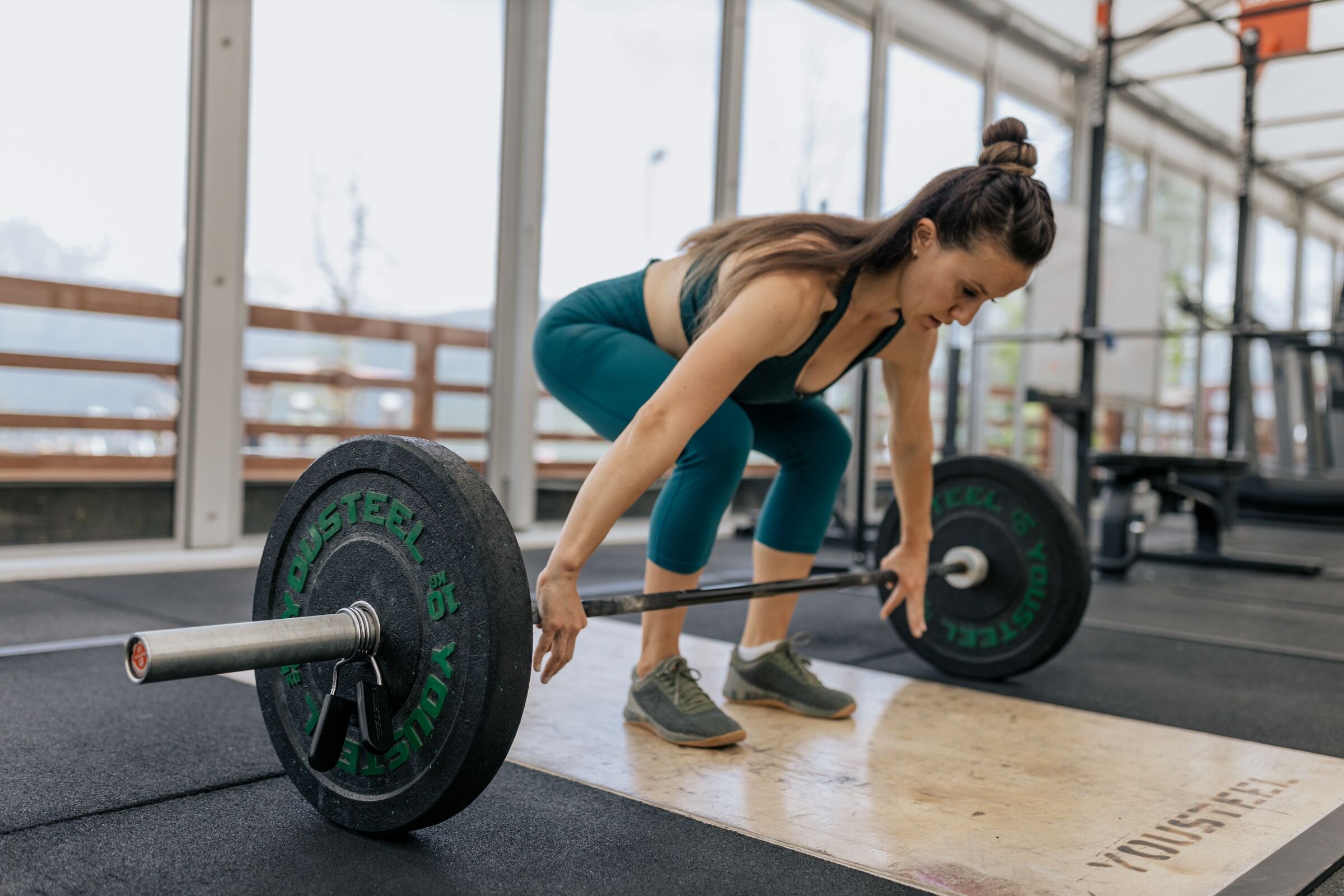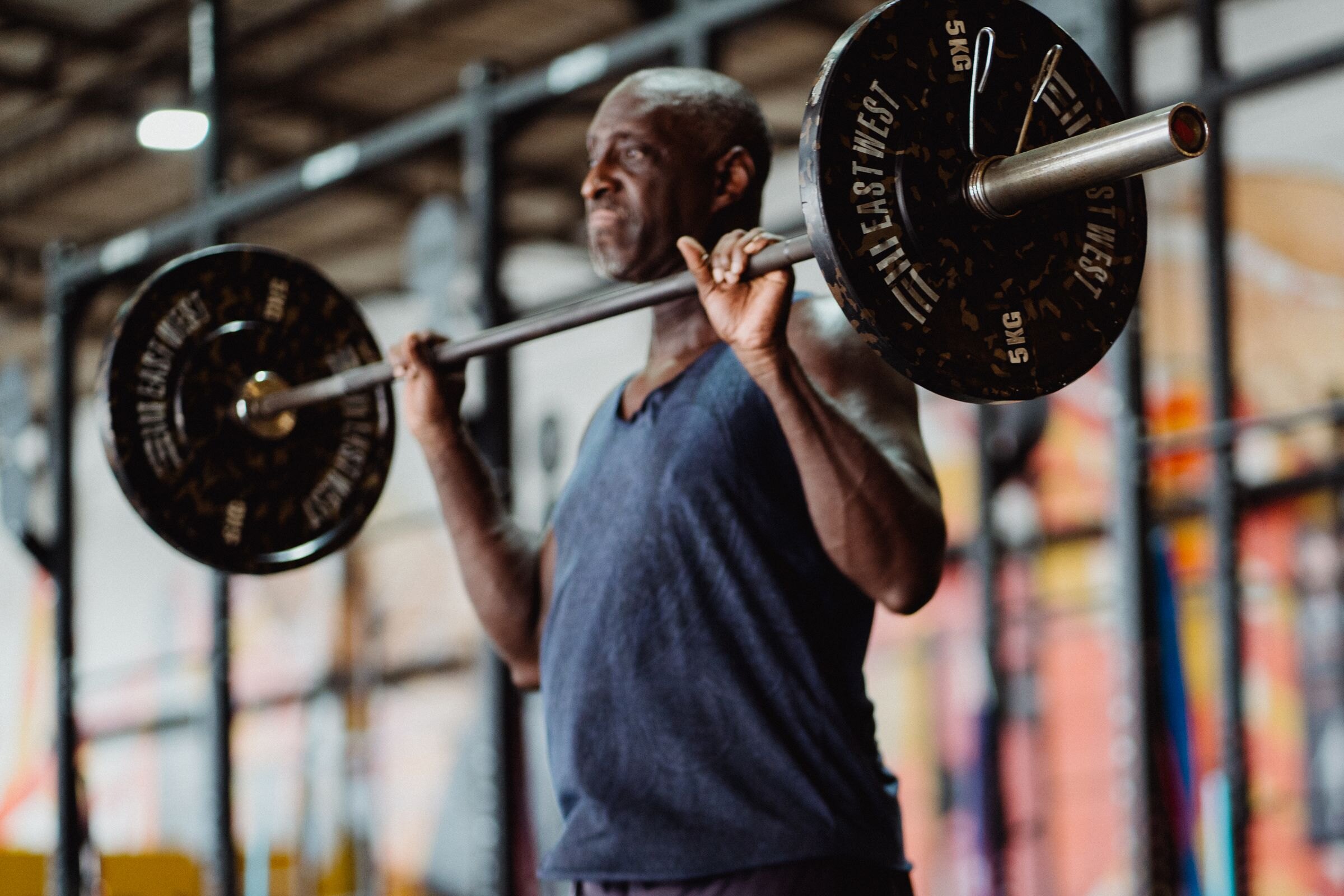
Strength is how much force your muscles can produce, usually measured by how much you can lift for a single rep. Hypertrophy is growth of the muscle itself. The two are closely linked: a bigger muscle has more potential to produce force, and getting stronger lets you use heavier loads to keep growing. But the training that maximizes one isn't quite the same as the training that maximizes the other.
Here's what actually changes between the two goals, what the research says about each variable, and how to combine both in one program.
The short version
| Variable | Strength focus | Hypertrophy focus |
|---|---|---|
| Load | Heavy, roughly 80–95% of your 1RM | Light to heavy, as long as sets end close to failure |
| Reps per set | 1–6 | From about 6 to 20 or more, most often 6–15 |
| Rest between sets | 3–5 minutes | 2–3 minutes on big lifts, 1–2 on small ones |
| Effort | Stop 1–3 reps short of failure | End sets within a few reps of failure |
| Weekly volume | Moderate; quality over quantity | Higher; more hard sets tend to mean more growth |
| Exercise choice | The lifts you want to get stronger at | A variety that loads each muscle well |
| Frequency | Practice the main lifts 2–3 times a week | Train each muscle about twice a week |
Load and reps: what the research shows
For decades the rule of thumb was simple: heavy loads for strength, moderate loads for size, light loads for endurance. The research has refined that picture.
A meta-analysis of 21 studies lasting at least six weeks compared low-load training (60% of 1RM or less) with high-load training (more than 60%), with sets taken to failure. Gains in 1RM strength were significantly greater with high loads, but muscle growth was similar with both.[1]
A 2023 Bayesian network meta-analysis pooled 178 studies on strength (5,097 participants) and 119 on hypertrophy (3,364 participants). Higher loads (above 80% of 1RM) maximized strength gains, while all the training prescriptions promoted muscle growth to a similar degree. The best-ranked approach for strength was higher-load, multi-set training three times per week; for hypertrophy, it was higher-load, multi-set training twice per week.[2]
On the strength of evidence like this, researchers have proposed replacing the old "repetition continuum" with a model in which muscle growth can be achieved, and in some cases optimized, across a wide spectrum of loads.[3]
The takeaway: you can build muscle with a wide range of loads, but to maximize your one-rep max you need to lift heavy. If you don't know your 1RM yet, here's how to estimate it.
Why heavy lifting builds strength best: specificity
Strength is partly a skill. Lifting near-maximal weights teaches your nervous system to coordinate the movement and recruit your muscles under exactly those conditions.
A striking example: untrained people who simply practiced a 1RM test (up to five single attempts per visit) for eight weeks gained as much 1RM strength as a group doing four sets to failure at roughly an 8- to 12-rep max, even though the high-volume group built more muscle.[4] If you want to get better at lifting heavy weights, you have to practice lifting heavy weights, in the exercise and with the technique you want to improve.
Rest periods
Short rests used to be standard advice for hypertrophy. But in a study of trained men who did three total-body sessions per week (three sets of 8 to 12 reps on seven exercises) for eight weeks, resting three minutes between sets led to greater gains in squat and bench press strength, and more growth in the front of the thigh, than resting one minute.[5]
Rest long enough to keep your performance up: about 3 to 5 minutes between heavy strength sets, 2 to 3 minutes for most hypertrophy work on big compound lifts, and 1 to 2 minutes on small isolation exercises.
Volume
Volume, usually counted as hard sets per muscle per week, drives muscle growth. A meta-analysis of 15 studies found a dose-response relationship: each additional weekly set was associated with a further 0.37% gain in muscle size, and higher-volume programs produced a gain about 3.9 percentage points larger, on average, than lower-volume ones.[6]
For maximal strength, volume matters less than heavy, specific practice, which is why strength programs typically use fewer, heavier sets. To find the right number of sets for your goals, see our guide to sets per muscle per week.
Effort: how close to failure?
A 2024 series of meta-regressions estimated how close to failure sets were taken, measured as reps in reserve, across strength and hypertrophy studies. Strength gains were similar across a wide range of reps in reserve, while muscle growth improved as sets ended closer to failure.[7]
In practice, leave one to three reps in reserve on heavy strength sets so your bar speed and technique stay sharp. For hypertrophy, take most sets to within a few reps of failure, and save true failure for the last set of safer exercises such as machines and isolation moves.
Exercise selection and frequency
For strength, the exercises you train are the exercises you get strongest at. If your goal is a bigger squat, bench press or deadlift, those lifts and their close variations, such as paused or tempo versions, should form the core of your program, practiced two or three times a week.
For hypertrophy, the specific exercise matters less than how well it loads the target muscle. Choose movements you can perform through a full range of motion from a stable position, and add isolation exercises for muscles the big lifts don't fully train, such as the side delts or biceps. Machines, cables and dumbbells are just as useful as barbells here, because the goal is hard work for the muscle, not a heavier number on one particular lift. Training each muscle about twice a week makes it easier to spread that work into productive sessions.
How to combine strength and hypertrophy
Most lifters want both, and the two support each other. Three common ways to structure your training:
- Heavy first, volume second. Start each session with one main lift for 3 to 6 reps, then do two to four accessory exercises for 8 to 15 reps.
- Heavy days and volume days. Train the same lift twice a week in different ways, for example five sets of three on the bench press on Monday and three sets of ten on Thursday.
- Blocks. Spend four to six weeks on higher-volume hypertrophy work, then three to four weeks on heavier, lower-rep strength work, and repeat.
| Day | Strength work | Hypertrophy work |
|---|---|---|
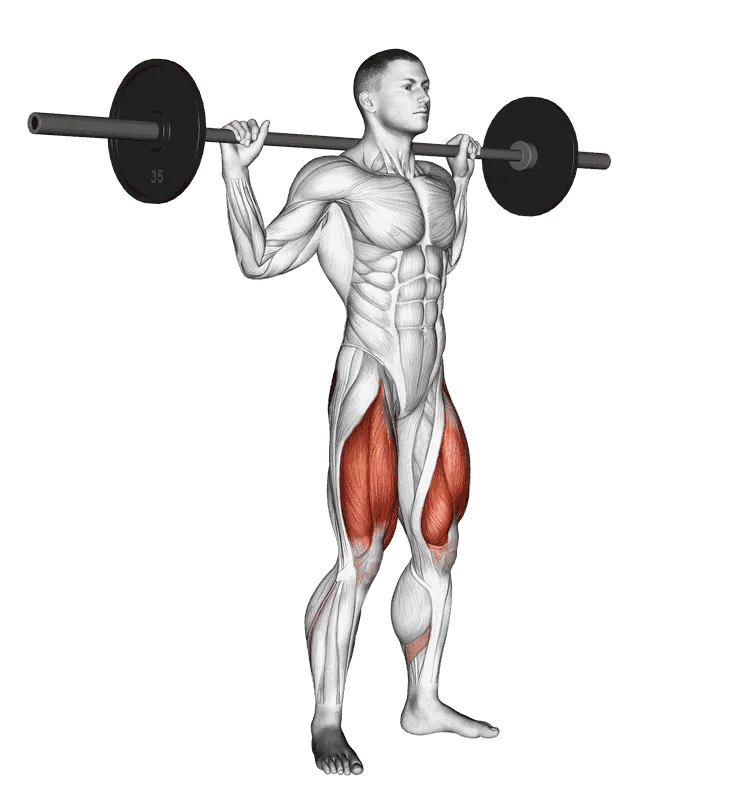
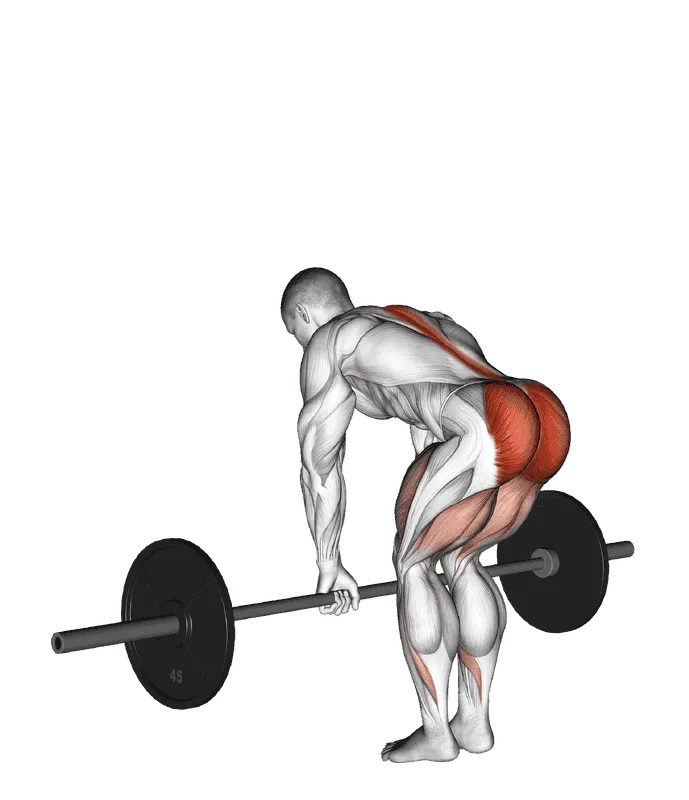
| Monday: lower body | Barbell squat, 4 × 3–5 | Romanian deadlift, 3 × 8–10; leg press, 3 × 10–15 |
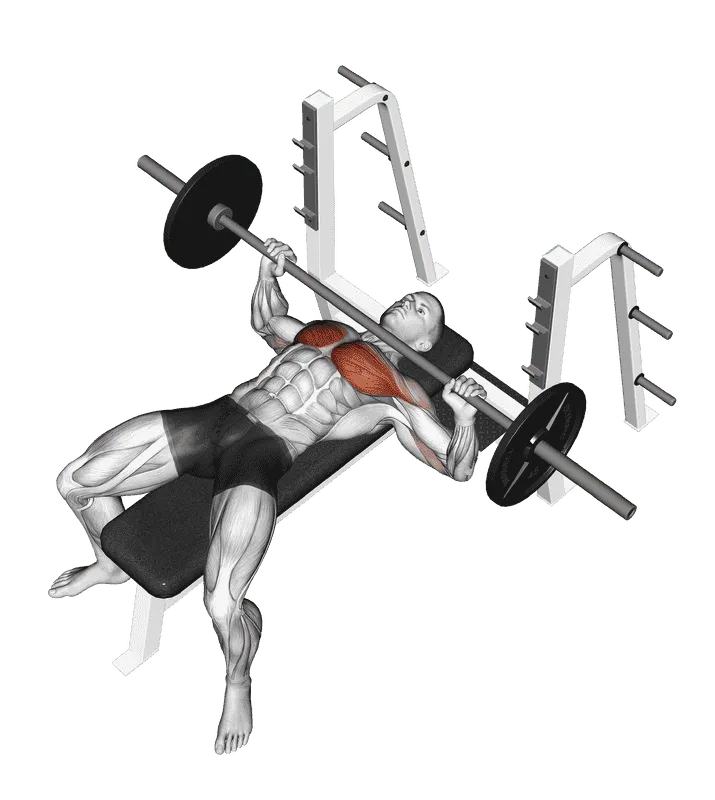
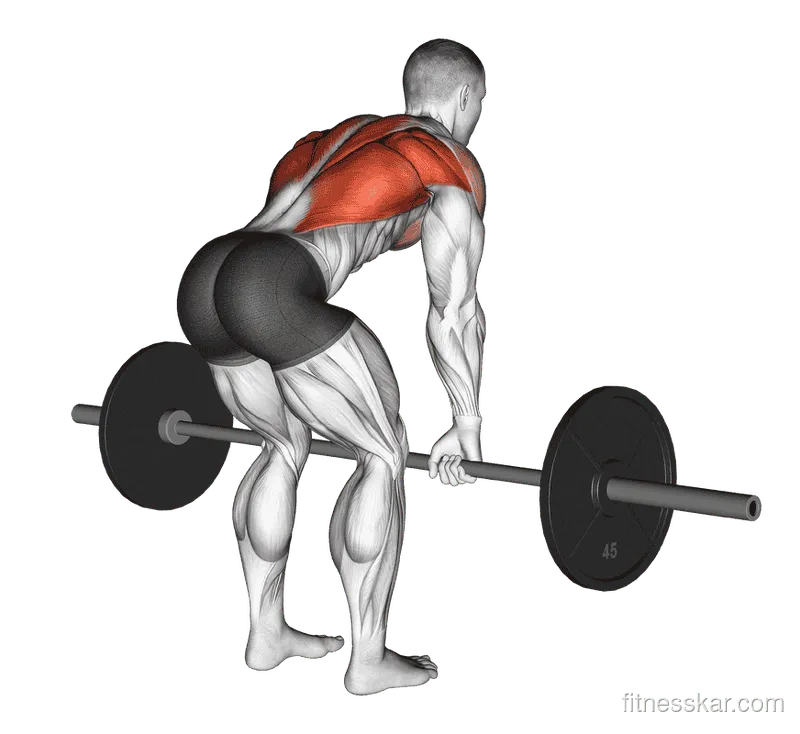
| Tuesday: upper body | Bench press, 4 × 3–5 | Bent-over row, 3 × 8–12; lateral raise, 3 × 12–20 |
| Thursday: lower body | Deadlift, 3 × 3–5 | Bulgarian split squat, 3 × 8–12; hip thrust, 3 × 10–12 |
| Friday: upper body | Overhead press, 4 × 4–6 | Lat pulldown, 3 × 8–12; barbell curl, 3 × 10–15 |
If you'd rather follow a ready-made plan built on the same idea, this intermediate routine pairs heavy work on the big lifts with higher-rep accessories:
Which should you prioritize?
- New to lifting? Almost any sensible program improves both. Focus on learning the main lifts and adding weight steadily; our beginner strength program is a good place to start.
- A strength sport or strength goal? Emphasize heavy, specific practice, and use hypertrophy blocks to build the muscle you'll later make stronger.
- A physique goal? Emphasize hypertrophy volume, but keep some heavy work in your week so your loads keep progressing.
Frequently asked questions
Can you build muscle with light weights?
Yes. When sets are taken to failure, light loads (60% of 1RM or less) build a similar amount of muscle to heavier loads, although heavy loads build more maximal strength.
If my muscles get bigger, will I get stronger?
Usually, but not one-for-one. Strength also depends on skill: in one study, people who only practiced heavy singles gained as much 1RM strength as a high-volume group that built more muscle.
Is 5x5 a strength workout or a hypertrophy workout?
Both, to a degree. Five sets of five at about 80% of your 1RM builds strength well, and with enough hard sets across the week it also builds muscle.
How long should I rest between sets?
About 3 to 5 minutes after heavy strength sets and 2 to 3 minutes for most hypertrophy work on big lifts. Shorter rests are fine for small isolation exercises.
Do I have to train to failure to build muscle?
No. Sets that end within a few reps of failure work well. Growth tends to improve as sets get closer to failure, but going to complete failure on every set isn't necessary, especially on heavy compound lifts.
Sources
- Schoenfeld BJ, Grgic J, Ogborn D, Krieger JW. Strength and Hypertrophy Adaptations Between Low- vs. High-Load Resistance Training: A Systematic Review and Meta-analysis. Journal of Strength and Conditioning Research. 2017. pubmed.ncbi.nlm.nih.gov/28834797/ ↩
- Currier BS, Mcleod JC, Banfield L, Beyene J, Welton NJ, D'Souza AC, Keogh JAJ, Lin L, Coletta G, Yang A, Colenso-Semple L, Lau KJ, Verboom A, Phillips SM. Resistance training prescription for muscle strength and hypertrophy in healthy adults: a systematic review and Bayesian network meta-analysis. British Journal of Sports Medicine. 2023. pubmed.ncbi.nlm.nih.gov/37414459/ ↩
- Schoenfeld BJ, Grgic J, Van Every DW, Plotkin DL. Loading Recommendations for Muscle Strength, Hypertrophy, and Local Endurance: A Re-Examination of the Repetition Continuum. Sports. 2021. pubmed.ncbi.nlm.nih.gov/33671664/ ↩
- Mattocks KT, Buckner SL, Jessee MB, Dankel SJ, Mouser JG, Loenneke JP. Practicing the Test Produces Strength Equivalent to Higher Volume Training. Medicine and Science in Sports and Exercise. 2017. pubmed.ncbi.nlm.nih.gov/28463902/ ↩
- Schoenfeld BJ, Pope ZK, Benik FM, Hester GM, Sellers J, Nooner JL, Schnaiter JA, Bond-Williams KE, Carter AS, Ross CL, Just BL, Henselmans M, Krieger JW. Longer Interset Rest Periods Enhance Muscle Strength and Hypertrophy in Resistance-Trained Men. Journal of Strength and Conditioning Research. 2016. pubmed.ncbi.nlm.nih.gov/26605807/ ↩
- Schoenfeld BJ, Ogborn D, Krieger JW. Dose-response relationship between weekly resistance training volume and increases in muscle mass: A systematic review and meta-analysis. Journal of Sports Sciences. 2017. pubmed.ncbi.nlm.nih.gov/27433992/ ↩
- Robinson ZP, Pelland JC, Remmert JF, Refalo MC, Jukic I, Steele J, Zourdos MC. Exploring the Dose-Response Relationship Between Estimated Resistance Training Proximity to Failure, Strength Gain, and Muscle Hypertrophy: A Series of Meta-Regressions. Sports Medicine. 2024. pubmed.ncbi.nlm.nih.gov/38970765/ ↩